Episode Transcript
[00:00:01] This morning I heard that some people moved at Horizon, and I heard that a bunch of kids helped out, said they were very helpful. But more importantly, they had such a great attitude about it. And it was so funny when I heard that. I felt so. I felt so proud. You know, I don't have anything to do with them. They're your kids, not my kids. You know, my kids are off of college or whatever.
[00:00:25] But I was just thinking about, like, if I'm that proud, you're way more proud.
[00:00:33] And if you're that proud, like, what does God think of his kids? You know, like, the way that you guys are growing up and becoming people that are.
[00:00:44] That adults look at and respect, the way you handle yourselves is really special.
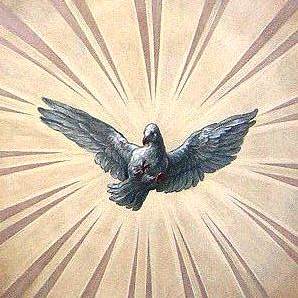
[00:00:52] Been doing a sermon series on the Holy Spirit, forming and filling.
[00:00:56] Starting with Genesis 1.
[00:01:00] The Holy Spirit, right from the very start, is interacting with all of creation, the chaos that exists without the Spirit of God operating on us. We see the Holy Spirit come in, and he forms the first three days. He separates out the day from the night, the sky from the land, that kind of stuff, and then he fills it. He gives meaning and purpose, order to all of creation. And we see this all through the Bible, and it applies to us as well. The language of forming and filling is very much a part of what Paul talks about, that we are being spiritually reformed. We're being separated out from the world, being made into people that are fit to the kingdom of God. We are filled with the Holy Spirit. That is, we are given the tools to accomplish the tasks that as God has the mission of bringing about a restored world, to bring order out of chaos, to make sense out of the senseless. He has put tools in our hands to be a part of his world and to be a part of doing good things with him, working with him. And he's proud of you when you work with him, forming and filling.
[00:02:18] So we've been talking about all that. I want to close out this week, and I wanted to finish out looking at First Corinthians, chapter 12 and 13, because I think Paul does a really. He does a really beautiful thing here as he describes the relationship between our being formed, our being made in the image of Christ, what it means for us to be formed by the Spirit, and the relationship between that and the spiritual gifts. He's all through First Corinthians 12. He's been answering a lot of. He's been answering questions that they had about these spiritual gifts. Apparently the church at Corinth was very interested in them, especially the Ones that were more like exotic, especially apparently speaking in tongues. They were very interested in that. Paul's like, we've, we've kind of read this already. Like, look, all these gifts are given to support and to help one another for us to be molded and formed together as one in the body of Christ.
[00:03:15] And it's not like this person who has this gift is any better or worse than this person with that gift. It's not like you came up with those gifts.
[00:03:25] God has intent to make his people powerful for his good, and he has given us the tools to do that. And, and so when he's giving you those tools you don't have, you're not in a position to say, oh, that's not, that's not as interesting. I wish I had. I wish I was better at that other thing.
[00:03:42] Not only can you say that the way God has formed you, the way God has supplied you with the spiritual gifts isn't important. I can't look at someone else and say that. Paul says it would be. So I'm going to supply this word. It would be disgusting. It would be mouth. It would be like.
[00:03:59] It would be like this blob of a thing for us all to prefer to be some part of the body instead of being some well round that we are. That we are well rounded and that we look at the different gifts that we have and we are grateful that we are surrounded by people who are different than us and have skills that are different than us. And he has.
[00:04:22] As you do those things, however it is you respond to the spirit as you do those things, it checks me. Like, the things that you're good at, you might think that's not a big deal at all.
[00:04:36] The thing that I'm doing isn't that big a deal. Well, it's not a big deal to you because it's a gift that you were given. You'd be surprised how often what you've done has been a big deal to me because it's not something that I'm good at. And that when you live out of the spirit and live in those gifts, you challenge me, embarrass me sometimes and make me, like, want to be better, like to be more formed in the spirit myself. So you're not in a position to say you don't matter. I'm not in a position to say you don't matter. God's given us those gifts to accomplish his purposes in the body.
[00:05:13] That kind of looks, looks back at last week. And I'm going to finish out chapter 12 here he's been talking about the gifts, and now he kind of looks at them and more through.
[00:05:24] He's still talking about the gifts, but he's looking at them through, like, the work itself. Not just the things that you're good at, not just the tool, but what you do with that tool.
[00:05:34] He says, all of you together are Christ's body, and each of you is a part of it. Here are some of the parts God has appointed for the church.
[00:05:42] First are apostles. Second are prophets. Third are teachers. Then those who do miracles, those who have the gift of healing, those who can help others, those who have gifts of leadership. Those who speak in unknown languages. Now, again, if you read other books of the Bible, other things that Paul wrote, you might have noticed that he says things a little bit differently. He never intends to give an exhaustive list here. It's not like, well, these are all of the functions of a church, and you have to be one of these things. Although it's likely that you are probably pretty good without knowing it, that God has.
[00:06:18] God has gifted you in some way to serve the body in some of these ways.
[00:06:22] I want to first explain the first couple apostles. That's like an ambassador, a sent one, a representative that is a person that when you.
[00:06:33] The way I think about it is like, when I. When I see you, I feel like I've gotten to know Christ better. Like you.
[00:06:42] There is something in the character and the way that you conduct yourself in the world that I feel like I see Christ. I understand Christ better now because of the way that you are conducting yourself.
[00:06:57] Like, I read the Bible and I read what Jesus has to say, but sometimes it seems a little bit, you know, it's 2,000 years in different contexts. But when I see the way that.
[00:07:05] When I see the way that you talk about that other person, or the way that you served, or the way that. When I see the way you do some of those things, I'm like, oh, I bet that's kind of more like what Jesus was doing.
[00:07:18] And it is an encouragement to me that you are an ambassador, that you're conducting your life like a sent one.
[00:07:31] It's like your body becomes a living testimony of Jesus Christ himself.
[00:07:36] Just in the way that you go about, just in the way that you're living in the world. That's a very powerful gift.
[00:07:42] Second, are prophets, foretellers, inspired speakers.
[00:07:46] We often think of prophets as people that say things in the future, and it's very often true. But in the Bible, prophets describe prophesy about what happened Prophesy about what is happening, prophesy about what will happen. But different times throughout the Bible, that word is used to describe all of that. And it always has to do with being one who, when they speak, they are speaking with the authority of Christ.
[00:08:09] They don't mix their wants or their desires with Christ's desires. I'll tell you this. I was told at seminary that every, if you preach, it's your job to be a prophet because you don't want to stand in front of people and mix up what you want to be true with what God says is true. And, and that's a very, That's scary. Like, it's a pretty intense thing, you know, like, I definitely don't want to, I don't want him to stand before God and him be like, although, you know, I'm doing the best I can. And I'm not thinking that he's going to be like, harsh or whatever, but like, I would, I don't want to be in a position where he's like, you really lied about me. You know, you wish that I said those things. You wish that you presented a God that's fit to what you wish I was instead of what I really was. You know, you're a person who, when you don't confuse what you wish God was with what God is, you actually foretell who God is in the world and you let it stand.
[00:09:16] Teachers, people who explain, people who, like, I didn't understand how to live my life for Christ, but the way that you understood that, the way that you explained that, it's like a five year old could have gotten it. You know, you're able to break down what it means to follow. Jesus didn't intend to be confusing. And so a good teacher is someone who isn't confusing. They're able to make the simple things of Christ simple in your life.
[00:09:46] One thing that's very interesting about Christianity, like, like people often think, like, oh, the deeper I want to get, I want to get into the deeper things. Like, the more, like I'm. The more meat things in Christianity, the most meaty thing, the most, the deepest thing that you'll ever learn is the first thing that you learn. For God so loved the world that he sent his only begotten Son, that whosoever believes in him will not perish but have everlasting life. The great commandment. Love the Lord your God with all your heart, all your soul, all your mind. Love your neighbors, yourself. Like, literally the deepest things that Jesus had to say, he put on the Lowest shelf.
[00:10:23] Now I get, like, I want to know more how to do that in my daily life. Kind of the nuance of how to approach that. And sometimes people confuse, like, how to love for how God says to love. And all that teaching is really important. But all of that is like just teasing out what was the deepest thing to begin with. And the deepest things are the most obvious things. And a good teacher is going to make the obvious things obvious to you.
[00:10:51] Those who do miracles, things that just simply weren't possible, sometimes they can be things that are physically, supernaturally impossible. They can be spiritually or emotionally relationally impossible. Things that we would say. I just can't possibly see how that could happen except that God was involved with it.
[00:11:12] I have seen things physically that I can't explain.
[00:11:19] The things that I have been most humbled by were the things that were when God took people's hearts.
[00:11:31] People who have every right to go on hating someone else because of what they did to them.
[00:11:38] And he literally, like, unknots their heart and they become soft again and they become willing to love. That's like, impossible.
[00:11:48] Healing similar. Maybe I was talking about healing there, but similar to miracles. Like, it could be physical, it could be spiritual. And they didn't necessarily separate the physical from the spiritual. They would assume that any physical illness would carry with it spiritual ramifications, and any spiritual illness would carry physical ramifications. The way that they imagine the body and soul is different than the way we think about it.
[00:12:13] Those who help others. This is something that's really big in our culture, because even if you're not a Christian, our culture values this. If you're a person who will go out of your way to help somebody else, they'd say, oh, you're a good person. And that's great. That's really good. But it can be sometimes, I think when the spiritual gift is easily confused with a cultural norm we can get, we can overemphasize that gift and we can apply it poorly because we want to be liked. Everyone likes culture.
[00:12:51] I don't want people to think poorly of Jesus or poorly of me. So I want to do things that everybody is going to appreciate.
[00:12:58] Well, if that's the motivation, it's. You're kind of like pulling it outside of its spiritual gift. I would say of all the spiritual gifts in our culture, the gift of healing is the one. I'm sorry, the gift of helping others is the one that we have to be most on guard about.
[00:13:13] Like, am I helping other people as God would help Them? Am I helping them as it.
[00:13:22] Am I helping them in a way that is keeping them from being formed? A lot of times we just want to help them not deal with the weight of sin. Like, you have a life that has sin in it and it generates a lot of discomfort and pain. We want to remove the discomfort and pain and not address the sin that causes it, because people don't.
[00:13:45] That person that's suffering isn't thinking that they're suffering because of their sin. They just want the suffering removed and they want to be able to go back and live the life they were living. And so if we're not careful, we can help others the way they want to be helped instead of way Christ wants them helped.
[00:14:04] Those who have the gift of leadership, in Christian circles, that always means servant leadership.
[00:14:13] To be a leader in the church doesn't mean that you're speaking or. Or that you are, like, impressive in some way. It means that you're serving other people.
[00:14:25] In Christianity, leadership is always servant leadership. And if you're not serving, you're not leadership.
[00:14:34] And those who speak in unknown languages. Now this is for us, that seems a little bit like, almost for a lot of you, maybe it seems like a tag on, like, who cares? But actually there is something about being so caught up in the spirit that you're not in control of what you're saying or doing physically. Sometimes the ecstatic nature of the relationship that you have with God in the moment produces something that's very beautiful.
[00:15:02] It's usually very private, something that happens on your own. But it isn't something that we should look at and say, like, okay, whatever about that one.
[00:15:10] It does tend. And for me, it might be like, humming. Like, I don't. Like, I don't have, like, some spiritual language or whatever, but I do notice that there's like. Like when I'm prayer, when I've been diligent in prayer and fasting and meditation and reading the Word of God, and I'm really at the point that I've confessed and I'm really present before God, I'm often not in control of, like, stuff, you know, and that. That's a good feeling. Honestly, I don't know how to describe it for you. It's good.
[00:15:46] So don't neglect that. This whole, like, unknown languages thing, if you're like, okay, whatever about that one. It's good.
[00:15:52] But he does put it at the end for a reason, along with leadership, because sometimes we mess up leadership, the things at the front.
[00:16:00] Nick brought this up in our link Group apostles, prophets, teachers. Those are the things that Jesus was really focused the most on in. In Mark, chapter one, Jesus went from place to place healing people. And the next day, or he was in this town healing people and casting out demons, really powerful, teaching them about the kingdom of God. The next morning, man, everybody wanted to get healed, right? Jesus, Like, I didn't come here to heal everybody. I came here to. For. So that everyone would see God. That I came here to be an ambassador for Christ. I came here to teach. I came here to be in a. To prophesy. I came here so that other people wouldn't just receive the benefits of the kingdom of God, but they would be citizens in the kingdom of God. And when you look at those first three, you are teaching other people how to become citizens.
[00:16:49] These are powerful gifts, really important gifts. And he says, pursue the higher gifts. Pursue not only doing things. And he's again, like, I want to be very plain. The other things are powerful and good.
[00:17:03] John calls them signs, like the miracles and stuff. These are signs of the kingdom of God that highlight that the kingdom of God is present. They're very important.
[00:17:11] But that you are in a position that you're helping other people become citizens of the kingdom of God, a part of the family of God, the body of Christ. Whatever your analogy you want to use, these are things that you really want to think about. Like.
[00:17:28] Like when you do things that help me, whatever you're doing, I want to be submissive to that. And you pay attention with other people that are like, if you could think of somebody in your mind that I anticipate that when I talk to them, they'll remind me of Jesus. Do you have anybody like that?
[00:17:52] What would it look like to emulate them?
[00:17:55] Paul says, follow me as I follow after Christ.
[00:17:59] If they have that spiritual gift, they're a person that's like, really good at that. He says, pursue these higher things. Maybe that's not a gift that you have, but it's something that they have for your benefit so that you can learn to be more like that. Pay attention to the people that remind you of Jesus. Emulate them as they are emulating Christ. It's that kind of thing.
[00:18:18] Okay.
[00:18:19] Then he goes on to say, let's look. Are all of us apostles, or are we all prophets? Are we all teachers?
[00:18:25] Do we all have the power to do miracles?
[00:18:28] Do we all have the gift of healing? Do we all have the ability to speak in unknown languages? Do we all have the ability to interpret unknown languages? Of course not.
[00:18:36] So you should Earnestly desire the most helpful gifts. Whatever is helpful. Like, your goal here is to be helpful to the people around you.
[00:18:48] There's somebody sitting, like, really close to you right now that could benefit from the way God has built you, things that feel very normal to you, and that when you do those things, other people get to learn how to follow Christ more.
[00:19:12] Don't neglect that. Don't be lazy with that.
[00:19:14] Love the people near you enough to live that stuff, whatever it is.
[00:19:19] And look, if you don't know.
[00:19:22] A lot of times, spiritual gifts, Christian circles, if you. If you grew up like I did, you might have done. They had spiritual gifts. Inventories where you did, like, the survey where basically I wrote down, like, the things I thought that I. I don't know. This is what it seemed like to me. I just wrote down the things I thought I was good at. And then they said, yeah, there's things you're good at. I'm like, oh, it makes more sense for other people to say, when you did this thing, it reminded me of Christ. When you did this thing, it drew me to Christ. When you did this thing, it checked me and it made me think, I need to adjust my life and be more like Christ. Maybe other. Maybe it's better to.
[00:19:54] Maybe it's good to be vulnerable enough to check in with other people and say, is there anything that I've done that's helped you learn more about following Christ? Has there been anything you know that could be like, nope, not really. That could be hard, you know?
[00:20:18] Or maybe they say things that you're like, well, that's lame. Like, it's not who you see yourself as. It's not what you want to be. It doesn't matter who you see yourself as or what you want to be. What matters is that you're a part of the body of Christ. And if you are helping them, then you have an important part of the body own that.
[00:20:36] But then he says this. He makes this turn here, which I think is. This is what I love so much about it. He says, but now let me show you the most excellent way or the highest way, the thing that I've been spending all this time talking about these spiritual gifts and how we help each other for the mission and all these tools that we have in place. But he says, if I could speak in the languages of Earth and of angels, but didn't love others, I would only be a noisy gong or a clanging cymbal. By the way, I want you to notice how poetic this is. How just that I want you to feel the way he's describing this.
[00:21:13] If I could speak in all the languages of Earth and of angels, but didn't love others, I would only be a noising gong or a clinging cymbal, like, discordant, annoying. I described it. Some people disagree with me, but I think it's like nails on a chalkboard. Like, it would be. It would be an awful sound if I could do. If I was an incredibly gifted communicator, but I didn't love. It would be like nails on a chalkboard.
[00:21:45] If I had the gift of prophecy and if I understood all of God's secret plans and possessed all knowledge, and if I had such faith that I can move mountains. Think about that. If, if I had the gift of prophecy, I could foretell what God was up to.
[00:22:01] I understood all of God's secret plans, which he's going to say later, like, nobody, we all know part. But if I had full, unfettered knowledge of all of God's ways, I want you to think of the power of that.
[00:22:15] And I possessed special knowledge and I had such faith that I could literally move a mountain.
[00:22:20] But I didn't love others, I would be nothing.
[00:22:25] I would have nothing to say. I would literally. I would be nothing valuable.
[00:22:34] If I gave everything I have to the poor and even sacrificed my own body, I could boast about it.
[00:22:41] But if I didn't love others, I would have gained nothing, I would be nothing, I would gain nothing, I would have nothing to say.
[00:22:49] All of these spiritual gifts that we've been talking about, except that love is at the heart of them, it's nothing.
[00:22:57] If there's any intent in your mind to be like, I want to be useful, I want to be helpful, I want to be able to.
[00:23:03] If that is coming out of anything other than an intense desire to see towards the good of the other person, then you have abused what it even means to have a spiritual gift. It is discordant, it is worthless, it is nothing.
[00:23:19] This, this really puts our. The whole forming and filling, these two different parts of the spirit that we talked about, in order we talked about filling is like the spiritual form, the being filled by the spirit with the spiritual gifts. He said, these spiritual gifts accept that you are formed, except that you are. That you love the way God loves are not only useless, they are.
[00:23:44] They are annoying, they are crass.
[00:23:51] I think sometimes that the church focuses a lot on things to do and not so much on a way to be. And I think sometimes the world. Now, I think sometimes the world is Annoyed with the church because they're annoyed with God. They don't like facing God. But I think sometimes if the church gets ahead of themselves and is focused very much on doing good things without actually loving, having a really transformed spirit to have been formed by the spirit. If we're not there, then everything that we try to do is crass and worthless and annoying.
[00:24:29] The thing that we focus on is that we love. He says now, like he describes love next, he says, love is patient and kind.
[00:24:39] It's not jealous or boastful or proud or rude. It does not demand its own way. It's not irritable. And it doesn't keep a record of wrongs, of being wronged.
[00:24:49] It does not rejoice about injustice, but rejoices whenever the truth wins out. Love never gives up. Love never loses faith. It always hopes and endures through every circumstance.
[00:25:01] Now, when you read that, you might think like, well, that word always is carrying a big load there. Like, I don't. If love is always that, then I don't love, because I don't always. That.
[00:25:12] That's not. That's not really the point. Yeah, you don't always love, but sometimes you love.
[00:25:19] Sometimes you really value and love the people around you. I was asking. Nick and Matanya are a small group. Spanish is their first language. And the word that we use for love can carries two massively different meanings. Like, I love chocolate cake. It means that I want to consume it for my own good, literally to destroy. I don't care that I destroy it. What I want is that it comes into me and satisfies me, right? And then there's another love, and it says, I would die for you. Like, I love you so much that I would happily give my life to see. To see your life succeed.
[00:26:01] Like, I just will your good above all.
[00:26:06] That's an entirely different type of love. You might think of a love like that, say, for your children or something like that, you know, so we. We use that word, love for things that couldn't be more opposite. He is establishing for us, thankfully, which version of love that we're talking about.
[00:26:25] And at your best, I want you to think about people in your life that you would love this way.
[00:26:32] If you love them this way, you have gifts to help them grow in Christ.
[00:26:38] If you don't love them this way, your gifts can't help them grow in Christ.
[00:26:43] It is discordant. It's for nothing. There's nothing of value or good in it because you don't first love.
[00:26:50] Now, this is him Talking about the spiritual, the fruit of the Spirit that we talked about for several weeks. If you look at Galatians 5, it says, the fruit of the Spirit is love, joy, peace, patience, kindness, goodness, faithfulness, gentleness, and self control. And when you look at that math, think, oh, yeah, there's all these different fruit. But in First Corinthians 13, Paul makes it clear that all of these fruit are love.
[00:27:12] Love is patient, love is kind, love is good, love is faithful, love is gentle, love is all of these things. And what he's saying is that all fruit is one fruit.
[00:27:26] It's just different ways to describe that fruit. Like, if you were to go to a tree and say, this is a pomegranate tree, like, what words would you. Pomegranate. What words would you use to describe it? It might be lots, several words, but they would all kind of fit together. You wouldn't say. You wouldn't say some words that don't work together.
[00:27:44] The more words you said, the more I could get to what pomegranate really was.
[00:27:50] You'd say this word, you'd say this word, you'd say this word. And then all collectively, I would say, oh, yeah, I kind of have a sense of what pomegranate is about.
[00:27:58] That's what the.
[00:28:03] That's what being filled with the Spirit is.
[00:28:05] Sorry, a little bit out of it this morning.
[00:28:11] Yeah, that's what the fruit of the Spirit is. One fruit. It's love.
[00:28:17] All right.
[00:28:20] He then goes on to say, prophecy and speaking in unknown languages and special knowledge will become useless one day.
[00:28:31] All the gifts that you have for that mission of God won't be helpful, but love will last forever.
[00:28:39] Now our knowledge is partial and incomplete, and even the gift of prophecy reveals only in part the whole picture. But when the time of perfection comes, these partial things will become useless. There's going to be a time when the mission of God is over, when we are living with God in his kingdom, as citizens, as a part of his household.
[00:29:02] And the tools that were useful in a world with sin will no longer be useful anymore. It's not going to be.
[00:29:11] You're not going to have to, like, show other people what Christ is like, because we will be living in a community where Christ is always being shown what Christ is like. And so these spiritual gifts, while powerful and important now, they are only subservient to something. And they are only for a limited time. The thing that will endure forever is the formation in your spirit that you have become loving the way God is loving.
[00:29:35] When I was a child, he says, I spoke and thought and reasoned as a child. He's describing himself now.
[00:29:42] But when I grew up, I put away childless things.
[00:29:46] When Christ has come, when I am living forever in the eternal glory of God and his kingdom, when sin has been put away, I will put away those childish things.
[00:29:57] Now we see things imperfectly, like puzzling reflections in a mirror. But then in the future, we will see everything with perfect clarity.
[00:30:05] All that I know now is partial and incomplete. But then I will know everything completely, Just as God now knows me completely.
[00:30:13] So I have to think for him. There's great encouragement in knowing that. That the work of the Spirit is for a season, but the transformation of the Spirit is forever.
[00:30:26] I am grateful for the spiritual formation that I've had now. And it's just.
[00:30:32] It's a shade of the spiritual formation that I will have eternally.
[00:30:37] I think about people that I've known, and I've seen them.
[00:30:42] You know, I've talked to people, and I've seen them to a great degree put away anger and hatred to serve each other, to really seek out the word of God. I've seen changes that happen in people's lives. And comparing what they were to who they are now is beautiful. And what he's saying is this is nothing compared to what it's going to be for us.
[00:31:06] He says, at the end of the day, when it's all said and done, these three things will last forever. Faith, hope, and love. But the greatest of these is love.
[00:31:16] The work of the Spirit is love, chaos.
[00:31:23] The world that exists outside of God.
[00:31:29] The world where things don't make sense, where things don't have purpose. That is fundamentally a world without God's love.
[00:31:36] To live a world without that is. That is fit for human consumption must always mean that it is a world of love. Not like.
[00:31:44] Not like whatever crass version of love that exists. But the love that he describes here, the love that says, I desire your good, the way that Christ desires you good. I look at you and I'm so proud of you. The way Christ is proud of you, the way your parents are proud of you.
[00:32:02] I hear the good things that are happening for you, and. And I'm as happy for that as I could be for myself. I look for things that you need. And I'm really happy to be able to help with that. Because if I can help with that anyway, then your life becomes more like Christ.
[00:32:15] It is a joy to be a part of your success. That is love. And then we are functioning like that, like the family of God as if your kids are my kids, as if you are my brother and sister. When we are living as if God is our Father and we are brothers and sisters, then we are filled with the Spirit.
[00:32:34] Then we are not living in chaos.
[00:32:38] This is the fundamental work of the Spirit.
[00:32:42] Let's pray, Father. God, I am eternally grateful for your word, Lord. Even these things that I've looked at over and over again, Lord, that you. You keep showing us more and more who you are and allowing us to draw nearer to you.
[00:33:05] God, I pray that in our curiosity about you, in our interest in you, Lord, that we are.
[00:33:12] It's like we're constantly satisfied and dissatisfied. We're constantly. We can't find satisfaction in anything else other than pursuing you. But we're never finished being satisfied in pursuing you, Lord. We want you. We want to know more fully, even though we know we never will until we are with you fully. And we could trust that because we have faith, hope and love.
[00:33:38] Amen.