Episode Transcript
[00:00:01] Speaker A: This is the last sermon of the series we've been looking at, looking at the process that the disciples went through from the crucifixion of Christ to the origin of the church at Pentecost. When the Holy Spirit comes on these disciples and they begin to share the Gospel in ways that spread the good news of Christ throughout the empire, this is what we're going to see today happens at Pentecost.
The end result of these disciples having gone through the process of first feeling a great sense of despair at Jesus, death, hope. When they begin to see that maybe he was, he's still around, not understanding what that's like, doubting that he's alive, is he a ghost, what's going on? The doubts that come up and then the time that Jesus spends with them, helping to like being present with them, help giving them the space and time for their, for their, their minds to catch up to this new reality that not only was Jesus the Savior of like the Savior, he was not the Savior that they were looking for. They were looking for a Savior that was going to come and liberate them from Rome, from external armies that were oppressing Israel. They didn't expect him to come and liberate them from death itself. They didn't expect him to come and liberate them from all sin that exists, from the sin that existed in their own lives, the sin that had kept them from becoming who they were called to be in Christ or as image barriers of God.
We saw all that over the last few weeks. We saw the evolution that took place and him at the end there, he's teaching them, and just before he ascends, he tells them, I want you to wait for the Holy Spirit and when he comes, you are going to have this mission. And the very last thing that he talks to them about is this calling that they have to participate in the mission of God.
Right at the very start of the testimonies, Matthew, Mark, Luke, and John of Jesus, we see him existing like his. His interactions with people involve a, a reforming of people's thoughts about what it, what it could be like to be a part of the kingdom of God. They had, I think, had too low a view of what it could be and a view that didn't require as much of them as, as Jesus articulated. You read the Sermon on the Mount, you can't help but see if you read the Sermon on the Mount, honestly as you're reading through it every single step of the way, it's like, that's hard instead of like he is Coming to liberate me and make me that. That liberation might be something that's easy, makes my life.
Oh, this is something that is like a service done for me instead of a service done in me. A transformation that occurs inside of myself.
It does bring liberty, but it's challenging because it is myself that needs to be changed to bring about that liberty.
We see Jesus articulate this, live it out, demonstrate it, teach it.
And here at the origin of the church, we see these disciples finally owning what this salvation is, what it means to be saved from sin, prepared to be the vessels of the Holy Spirit, carrying out the mission of God. We're going to pick up with Acts, chapter two and see what that looks like.
When the day of Pentecost had come. Pentecost being 50 days after, after the Passover, Penta 5.
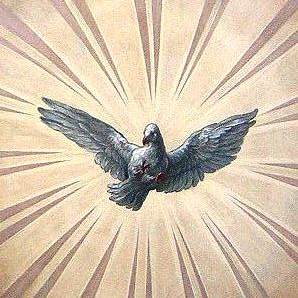
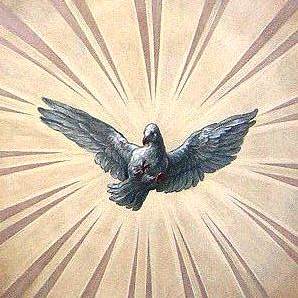
When the day of Pentecost had come, they were all together in one place. Suddenly, a sound like a violent wind blowing came from heaven and filled the entire house where they were sitting. And tongues spreading out like fire appeared to them and came to rest on each of them. All of them were filled with the Holy Spirit, and they began to speak in other languages as the Spirit enabled them. All right, the word like is here. Like, this violent wind, like.
Like tongues of fire. I imagine that they are experiencing something that is, like, physical. They are.
There is something about their sensations that they're having that is affecting their hearing, what they see, what they feel.
And the best words you can use to describe it.
It's like being in the midst of an atmospheric event. For one. If you've ever. Have you ever been.
Let's start listening like this. Have you ever been outside? And like, this is. This happens down south pretty often. You can actually see a front coming through.
And the atmospheric pressure drops and it gets. It's like you actually feel the wall. It's like a diff. It's like you. You have a different world that shows up. Suddenly you were. It was warm, it was sunny. You can see it coming.
The wind picks up immediately, your ears even pop. And then the weather, the temperature drops like a certain several degrees. It's like you literally stepped from, like, one location into a different location. It's like your physical space changed. Right?
It's more than that. The way they're describing here, it's violent. It's not just, like, different. It's violent. Maybe, like, if you've ever, like, may not have been here, but like, I've been present as, like, a hurricane was coming in and the sky is like, Turning green. And it's like the sky is actually, like, you see it. Like, it's almost like ocean waves coming at you. And the same sort of, like, change.
It's this overwhelming thing that happens, and in the middle of it, you feel incredibly small. I don't know how else to put it, but it's like.
It's like you're just.
There's nothing.
It's just something that you feel, you hear.
And because of all of that happening, you feel.
It is as if your whole world changes and your space in it changes.
Something like that. A wind, a violent atmospheric change.
Also, like being dropped in the middle of flames like fire. I don't know if you've, like, been dumb enough to, like, I did. So, like, there's this heightened sense of reality when you're, like, running through flames and, like, trying, like, you know, being dumb about that stuff. You're very aware of the heat and of the, like, danger and the aliveness of the moment.
Like flames do. Like, when you're in the midst of them, it does something psychologically to you. Like, you're just very aware.
It feels overwhelming. I don't think it's an accident that the Holy Spirit is associated with these, like, biological changes that occur. Occur inside of you. It's as if.
It's as if the world is different than it used to be. Your perceptions, your sense of what's happening is different in the Holy Spirit than without the Holy Spirit. It's interesting. John. John the Baptist. When you read. You read about John the Baptist, man, he comes. He is like. He's throwing fastballs everywhere. He's like, they kill him for a reason. He was, like, hardcore preaching. He was, like, baptizing. He was.
Wow. He was a wild man, right? He. They're like, this guy, dude. This guy is something. They either thought he was crazy or he's a prophet. They didn't. Maybe both, but they were like, this guy is insane. He's like, you don't get it. I'm only baptizing with water.
Coming after me is somebody baptizing with fire and with air. With. With. With air and fire. Like the.
The baptism that. You think I'm crazy.
The spirit that will come on you in Christ, that's crazy. The transformation that will occur in the spirit.
That's where things get really turned upside down.
You think I am upsetting the powers that be? I'm upsetting how things are? No, no. When the Spirit comes on you, there will be a stark difference between you and that generation. There's going to be something that happens with you that causes you to see the world drastically differently.
They, after having waited, gone through this deep change of mind of spirit, of relationship to God, having been taught by Jesus for these 40 days that they were with him after his resurrection, after waiting together and praying together, and really considering all that Jesus was and understanding him totally differently, the Spirit comes on him now. Why now?
It says now, there were devout Jews from every nation under heaven residing in Jerusalem at this time.
Pentecost was a time that people came from everywhere to celebrate in Jerusalem. And when this sound occurred, a crowd gathered and was in confusion because each one heard them speaking in his own language.
Completely baffled, they said, wait, aren't these who are speaking, Aren't they Galileans? Galileans are like a redneck that can't.
Like, they drop their endings of their words and they clip. Like, even if you can speak English, that person's hard to understand.
So when they're like, I hear them and they can't even speak English and somehow they're speaking French, you know, like this is what they're doing isn't just miraculous that God is using these people to do this is like insane.
How is it that each one of them, each one of us is able to hear them in our own native language?
Very likely that all these people would have known Hebrew or probably Aramaic, definitely some Greek. They would have been able to communicate with each other not in their own native language.
But as the disciples filled with the Spirit are perceiving things differently, they are speaking in ways that other people are hearing it natively, native to their own language. This is a. A lot of times when we talk about speaking in tongues, we think of like, I don't know if you've grown up in a church tradition or aware of speaking in tongues, but it's usually like some ecstatic language that requires somebody translating it or something. It's not like. It's not like an existing language. That's not what's happening here. What's happening here is these people are speaking.
Somehow they are speaking into that language. And there's other people hearing in that language. And I don't know where in the process it's happening, but something, something impossible is happening in the communication of Jesus Christ in this moment.
Luke takes the time then to tell you so in our native language. And then he tells this list that seems pointless.
Parthians, Medes, Elamites, residents from Mesopotamia, Judea, Cappadocia, Pontius, in the province of Asia.
Figria pamphlet, Pamphylia Egypt and parts of Libya. Near Cyrene. Visitors from Rome, both Jews and Proselytes, Cretans and Arabs. We hear them speaking our own language about the great deeds God has done.
I got a map up here showing where all these people are located.
This is Jerusalem. There is this.
It's this weird. It's the.
It is an outpost on the edge of the Roman Empire and on the edge of the Parthian Empire. It is a redneck. Like, it's a place where these two empires kind of fought over this spot for a little bit.
And neither empire really trust the people a whole lot because they're kind of playing off of each other. Neither of them.
Like it's this no place that unless you are Jewish, you're not really interested in people happen to be. People who are Jewish that live among these two empires, happen to be here in this moment.
And they are hearing information about the Messiah communicated in their own language. What is that about?
First of all, it's not. I don't think it's an accident that Luke describes the Spirit of God coming on Jesus at the start of his ministry in Luke 1.
And in that you see the Spirit of God animates like is revealed. Like reveals that God is doing something to the people around him that sees him getting baptized, sees Jesus getting baptized in Luke. And there's this awareness that God is working through Jesus to reveal his kingdom. That Jesus mission is to reveal his kingdom. And that's.
And then what he does after that is the act of revealing that kingdom. He teaches, he heals, he. You know, all that stuff that he does.
Same thing here.
God is.
God is in a powerful way bringing his spirit to descend on these people at the start of this ministry, as they're called to do what they're called to do. And the fact that they are speaking in all these languages speaks to the goal that God has in mind for his mission.
It is not true that every time the Holy Spirit is present among us, he causes us to speak in different languages.
That's not what happens all the time. But there was something specific here that was important for that God is revealing that what he is doing is not just for Jerusalem, it is for all of humanity.
Paul speaks up right after or Peter speaks up right after this and makes that really clear.
So they had been in the upper room. They have this like shift in their. Like, it's as if their world shifts. They become. It's like something they couldn't see. They could see before, something they couldn't feel. They can feel before.
And they can't help but to go out and to start telling people this Jerusalem, which is super crowded right now, and just start talking to people about Jesus, right?
As they are doing that, the people around them are like, this is crazy. What's going on?
So it says Peter stands up, like, I guess he gets up on like a table or something in the middle of this crowd and he says, pay attention to my words.
This is what was said through the prophet Joel. What you're experiencing now is what you should have expected if you'd been reading Joel. This is that moment.
I don't know if you've ever, like.
Like, if you've been, like, maybe you played a sport or something and you've been training all year for something, and then like, this is the time that you are.
This is that game. This is that championship game, right? This is that moment. Everything, everything that you've been anticipating, everything that you've been preparing for all this time, this. This is now. This is what's happening. This is what he's saying.
All of Israel, throughout all history has been prepped.
You've been broke down and built up over and over again for this moment. What Joel prophesied, this is that in the last days, says God, I will pour out some of my spirit on the whole human race, all languages, everywhere.
Your sons and your daughters will prophesy. Your young men will see visions. Your old men will dream dreams on my servants in those days, I will pour out some of my spirit and they will prophesy.
It's like.
It's like in Genesis, the story of Babel. All of humanity is divided because in arrogance, they tried to reach up and become like gods. They tried to elevate themselves to heaven. And God divided them. God divided their language. God broke them apart. And here you see in Christ, you see in humility, you see God coming down to humanity to reunite them. And language becomes that icon, that visualization, that way that you can tell that something new is happening for the humanity of the world.
Like Joel said in those last days, it's not just going to be Israel. This is about. It's not just going to be. This is for the whole world. I will pour out my spirit on the entire human race.
Not just for you, Israel. This is for everyone.
Your sons and your daughters will prophesy men and women, young and old.
This is for every. Every cultural division, every identity that we use to divide ourselves and say, well, I'm glad I'm this, but I'm glad I'm not that. Like there was actually a prayer where they would. They would pray, like, thank you for making me Jewish and not Gentile. Thank you for making me a man and not woman. Thank you for making me free and not a slave. Like they actually were grateful that they were this and not that.
Joel saying, there is no this and that anymore.
That the division that was initiated through your sin is being wiped out in Christ.
That the kingdom of God is for all people everywhere. And here, as I'm initiating my church, I'm making sure that you're clear even in.
Not just in a language you can understand, but in your home language, in your native tongue. I'm making sure that you understand that this testimony of Jesus is for you.
He goes on to explain a little bit about Jesus. He uses some verses that they would have. That would have been more relevant to them than, I think, to us. But then he says this, which I think is really powerful. He says, listen, men of Israel, Jesus the Nazarene, a man clearly attested to you by God with powerful deeds, wonders, and miraculous signs that God performed among you through him, just as you yourselves know.
You were here 50 days ago during. During Passover.
You saw what happened.
You know him.
You thought you knew what happened when he was crucified.
But there was more to it.
And we are here to testify.
We are living this Holy Spirit that testifies that there is more to all that, that you didn't understand.
This man that was handed over by the predetermined plan and foreknowledge of God you executed by nailing him to a cross at the hands of the Gentiles. But God raised him up, having released him from the pains of death, because it was not possible for him to be held by its power.
He thought he was dead.
Death wasn't possible for him.
And he says this was something that was initiated by God and carried out by sinful men.
That idea gives me so much hope, this experience that caused, like, unbelievable despair for the disciples, like. Like all of their hope had evaporated at Jesus crucifixion. They thought they were totally wrong because the experience didn't fit what they knew that a good God would do.
Because these evil people had all this power and they killed him.
They didn't know how weak they were compared to the God of the universe.
That is, if you find yourself at the hands of evil men.
And the pain that they can cause and the damage that they can do, It is impossible in that moment to know what God is able to do with that.
I was just talking to someone about deep evil that people do.
And I was just.
The awareness of the good that came out of that was like the multiplication of good that came from that person's life is a testimony to God's goodwill. Good work.
When I read this, I can't help but think how ignorant I am of what's happening among the.
In the evil that happens in the world.
Anyway, that just came up. So anyway, God raised him up, having released him from the pains of death because it was not possible for him to be held by its power.
The disciples, recognizing that the power of sin and death wasn't enough for him, is also not enough for anyone that follows him.
This is the good news, guys. This is the good news.
Sin and death is not powerful enough to. To contain our Savior, the one who saves you.
Peter ends with this. He says, therefore let all the house of Israel know beyond a doubt that God has made this Jesus whom you crucified, both Lord and Christ. I.
It's one thing to think that evil is taking place, that other men are doing that evil, and to be comforted that God is in a position to do good out of that evil, that's.
That's good.
But Peter strips away that. The distance from that. And he says, that evil man that I'm talking about, that evil woman that I'm talking about, that's you, that. That you crucified.
Therefore, let all of you sitting here know that beyond a doubt that God had made Jesus whom you crucified, both Lord, that is the one whose will is done, and Christ, that is the Savior, the one that can save.
Now, if I'm there experiencing all this, I don't know what I'm doing with it. I don't know what I'm doing with all that language, them speaking those different languages. Maybe I'm laughing and thinking like, are these guys drunk? What's going on here? You know, I don't. I don't know how I'm responding to all this, but I bet when I heard that I was the one responsible for the death of this person that you're saying is the Savior of the world. I bet I didn't like that very much. I bet I didn't like hearing that I am the cause of Jesus death. I don't know how I feel about it even now sometimes.
You know, then I read their response and I think, this is beautiful. This is my. This is actually what I find to be the most beautiful part of the story.
Now, when they heard all this, their hearts were. They were cut to the heart. And they said to Peter and the rest of the apostles, what do we do, brothers?
When they heard all this, when they heard what happened to Jesus, when they heard about what God did, when they heard what God was doing in the midst of them and they heard that they were the cause, they didn't think, don't blame me.
I am a good person.
I know bad people.
You want to talk about bad? Let's talk about what this person over here did. I've never done anything like that.
I'm not evil. There's evil in this world, But I am basically good. That's a man. How many times do I hear that? I'm not a bad person.
Yeah, okay. That's not what they said when they heard all this. And when Peter ends with, you crucified the Savior of the world, you put him to death.
Their hearts didn't respond in arrogance and rejection of that. They didn't hear that news from the disciples and reject that they were the ones that needed saving.
They said their hearts were cut to the quick.
They accepted that they were not good, that fundamentally they did need a Savior.
Let me tell you this.
If you perceive that you are fundamentally a good person, I don't have any idea what Jesus has for you.
I don't know what you think you're being saved from in Christ, if it's not your own sin that is fundamentally corrupting your spirit, that your heart has been turned to stone as a result of sin and that you needed to be revived through Christ. If that's not what you think you need, I don't know what any of the testimony of Christ can do for you.
I find it beautiful every time somebody's heart is softened and they turn to the message of Christ and they say, what do I do?
I don't want to be that person.
They don't say, I'm not that person. They say, I don't want to be that person.
Can you tell me how I can become somebody that's alive again?
Somebody that is not dead in my soul, not somebody willing to hurt other people for my own good, not somebody that would crucify Christ.
Peter's response was very simple.
Repent each one of you and be baptized in the name of Christ Jesus for the forgiveness of your sins.
Before we get to what will happen as a result, I just want to repent.
Turn away from the way you were thinking about the circumstances of your life, the people around you, the God that created you, where you fit into it, what you needed to do. As a solution to it. Repentance isn't just like, oh, I need to change what I'm doing. It's a. It is as if this whole process the disciples went through, from the. From the resurrection, the death of Christ to Pentecost, this transformation that was life altering, that they saw the world totally different. They saw their place in it differently. That's what repentance is.
It is like.
It is like dying.
Your perception of the world and your place in it has to be brought down and built back up. It's like you have to die and be born again. That's what repent. To repent means to literally change your world of you from one that sees you as the Savior, you as the victim.
Like in this story of Christ, you're neither one. Like Christ is the Savior, you are the one sinning that is inside of you that you need to be rescued from. He is saving you from yourself.
You need to see that. You need to accept this. Your heart needs to be cut to the quick, and in humility, you just ask, what do we do?
What you do is you accept that the world you thought existed is not the world as it is. Repent. That's repentance.
And then he says, be baptized.
Baptism, that would have. It's funny, that would have been something that would have been hard for them to hear. Baptism was something that Gentiles did when they became.
When they became Jewish. Like, if you were. If you were born Jewish, you weren't. That you didn't need to get baptized. You need to get baptized if you were. If you were converted. For him to tell these people who were. Who made the trip to Jerusalem, who clearly cared a lot about their faith, who, you know, among Jews would see themselves as, you know, pretty upstanding Jews. You, you need. You are the ones that need to convert to being loyal to Jesus.
You, you who crucified Jesus need to convert who you were. That is the symbolism of, like, bodily dying and being born again to identify with Christ. It's like the closest we have to it in our culture is like marriage, if you take that very seriously. A lot of times in that marriage, the vow is expressed, like, literally a dying to yourself and becoming a new person in that marriage. This is the closest ceremony that we have to a baptism ceremony where you are physically demonstrating to all the people around you that who I was isn't who I am anymore. I have repented. And it's not just something that I know about myself.
Symbolically, I am demonstrating that I am this new Person.
I am making this thing that is true of myself inside, visible, demonstrating it on the outside. And I am showing you, look, this is who I am now.
Don't think of me as one as I was before.
Hold me accountable. Just like in marriage.
I'm not single anymore. Like, don't treat me like a single person.
You don't love me without loving my wife. You know, that kind of thing. In marriage, when I am baptized in Christ, my identity is in him. My loyalty, my allegiance is to Christ. And if you know anything about me, my baptism explains who I am.
So there's this inner, like, just breaking of the heart that says, show me what to do.
A willingness to see the world through Christ's eyes and a conviction to follow him through. Baptism as a symbol, as a sign of this new person that you are not just on the inside, but revealed to the world.
Repent and be baptized.
And he Sundays, you'll receive two gifts. You'll receive the forgiveness of your sins, and you will receive the Holy Spirit.
The Holy Spirit is something. We have a whole different sermon series on this. But the Holy Spirit is not.
It's not just this, like, toy to play with. It's not just like, oh, it's like these magic tricks I can do now. It's like, oh, I'm good at this. Like the Holy Spirit, the Holy Spirit is always tied to the kingdom of God. For the mission of God, God's will is being done. That's literally what the kingdom is. The kingdom is wherever the king's will is done. That's literally the definition of a kingdom. A king has a kingdom. That's where the God, where that king's will is being done. In the kingdom of God. You are participating in the kingdom as God's will is being done in your life, your life becomes the kingdom of God. The Holy Spirit is what motivates it, is what alivens, quickens, transforms you to participating in God's kingdom. It is the motivating spirit, it's the motivating soul that enables you to function outside of your base instincts, to function in the will of God.
It is always a testimony to God and it's always associated with the action of God, with the mission of God. And so at this moment, it had to do with demonstrating a unity of the entire world under Christ. It shows itself up, these people speaking in multiple different languages, like, I don't know what mission God has for you right now, in your family, among your friends, but I, I bet there is some way that as you are Animated by the Spirit of God. The mission of God will be made possible because you are participating in his kingdom through His Spirit. And it will look very different than speaking Parthian or Roman or Greek or whatever it will look.
It will be fit to what God needs done in his kingdom, in and around you.
That is how the Holy Spirit will manifest itself in your life. Always fit to God's work. That's happening.
That's what God's Spirit does. It's fit to his work.
So you will receive forgiveness from your sins, and you'll receive the gift of the Holy Spirit.
I overlooked the forgiveness of sins.
You know, we almost think of it as like, if my heart's broken and I say, I'm sorry, you're a jerk if you don't forgive my sins, right? That's kind of like.
That's kind of what a good person does.
That's a vision of the world that comes on this side of Christ. That is something that's baked into. That is baked into a culture that has already kind of taken on some aspects of the Kingdom of God to start with.
Just because you're sorry that you did something brutal to me doesn't mean I am obligated to forgive you of that. Like, fundamentally, what is it in nature that makes me responsible for forgiving you for some evil that you did? Matter of fact, doesn't it make more sense for me to extract from you some pain equal to what I received?
Or better yet, what if I'm capable of extracting even more pain from you so that you would never do that again, so that you would be an example, so that no one would ever. No one would think I want to do that evil because so much worse would happen to me. What if we live in a world where forgiveness isn't expected, but instead what's expected is that I would extract the most possible pain from you for any pain that you did for me? That actually makes a lot of sense.
Unless in the kingdom of God, we recognize that our sins have been forgiven, that the depths of our own sin, our own sins have been forgiven by one with the power to extract the most punishment possible.
And I am.
I would be embarrassed not to participate in that forgiveness as well.
My sins are forgiven.
Forgiving other people their sins makes sense, given what's been forgiven for me at that point. You will then receive the gift of the Holy Spirit. And this promise is not just for those people that were there, but for your children and for those who are far away, as many as the Lord our God will Call to himself. That's you.
With many other words, he testified in exhorting them. Save yourselves from this perverse, crooked generation.
Save yourselves from a world that is not looking to Jesus Christ as a Savior.
Save yourself from an arrogance that says, I can save myself. Or I have other ideas about what salvation looks like.
That I think I am the victim and that I am not the one. That.
That the sin is not in me, that I am not the perpetrator of sin, and that what I need being saved from is from my own sin.
Save yourself from all the perverse ways that we rewrite the good news of Christ.
Submit yourself to him.
Repent and be baptized.
At this point, the church explodes.
Today we have a young man in our church who has repented and has asked to come and be baptized.
It is something that.
It's a transformation. My brother has already.
A repentance that has already existed in his spirit. But he graciously has allowed us to participate in that, to witness through baptism the transformation that has happened in his soul as he has come to understand. You know, he. He's not like these guys. Like, he kind of grew up in a church where a lot of this stuff was kind of normal. It's kind of like. Like, I grew up. I didn't have this, like, oh, my gosh, I need to. I need. I was this thing over here. Now I need to become this thing over here.
I don't. I grew up in a household where following Christ was normal.
And it became something from something that my family was a part of to something that I began to own myself. And my baptism was a testimony that I myself was taking on the conviction that Jesus Christ is Lord, not just as. Not just of my family that I'm a part of, but for me personally, that I am prepared to make this confession of Christ. I am prepared to look to Jesus as my Savior.
The Luke Bogbro has done that. And this morning he's come to be baptized. And he's asked his dad to perform his baptism at Horizon.
We love it when people who have been very much a part of helping a person come to Christ actually performs the baptism.
It's hard to find anything more beautiful than a parent baptism baptizing a child.
And so this morning, that's what we're going to experience.
You guys ready? Okay.
[00:40:55] Speaker B: Hi.
I just want to say a few things.
From the time Luke was a little baby.
Not baby, little guy. It's been clear he's a really special guy. Guy has a really big heart for people. And it's been an honor to be his parent and watch him grow in his.
His love for God as well. And so, yeah, it's a really big blessing today. It's. I guess today, like Clay was saying, Luke, you're also recognizing that even though you are a really great person, that being a great person isn't enough.
Because like all of us, you have a sin problem, and that leads to death. And you want.
You want to pursue Christ and the forgiveness in him, which is pretty awesome. There's a part in Romans where Paul is, like, talking about how we're all fallen short and we all have sinned. And then he sort of cries out, who will rescue us from this body of death?
And then he answers his own question. He says, but thanks be to God through Jesus Christ our Lord.
And so in baptism, like Clay was saying, what we do is we identify with Jesus death, and you join him in it. As you lay down in that water, you are dying with him to your old self. The Bible says, to all the things you have been, although, like you said, you haven't been much except good, but also to all the things that you could have tried to do on your own, could have become without God, all the things that you might have wanted to dream up, that you could do in this life, you're dying to all of that.
And you're saying, I want to join my life to your life for the rest of my life. Like Clay said, my identity is in you now. And then you come up out of the water and you're being raised with Jesus into his mission, into all the things that he has for you and the rest of your life. You're saying, I want to follow you with all of me.
So is that what you want to do?
[00:42:48] Speaker A: Yes.
[00:42:50] Speaker B: So I'm going to have you repeat after me the profession of faith. I'm sure Christians have been saying since that very first day. All right, I believe. I believe that Jesus is the Christ.
[00:43:00] Speaker A: That Jesus is the Christ, the son
[00:43:02] Speaker B: of the living God.
[00:43:03] Speaker A: The son of the living God.
[00:43:05] Speaker B: I accept him as my Lord and Savior.
[00:43:07] Speaker A: I accept him as my Lord and Savior. That's awesome.
[00:43:10] Speaker B: All right, go ahead and get in that water. Get cold.
Luke, because of your profession of faith, I baptize you in the name of the Father and the Son and the Holy Spirit, dead to sin and alive in Christ.