Episode Transcript
[00:00:01] Last several weeks, we've been looking at this time period, this interesting time period in the formation of the Church, the gap between the crucifixion of Christ and the start of the Church.
[00:00:14] And what happens in the lives of these men who are disciples of Christ as they go from.
[00:00:21] Well, I mean, they start off with, like, confidence, like pure sureness of their mission, confident they're following the Messiah, leading them into the restoration of the kingdom of God, the restoration of Israel.
[00:00:36] Then that Messiah dies. He's murdered by the authorities.
[00:00:40] They are in abject despair. They're scattered.
[00:00:44] They're starting to.
[00:00:46] They're hiding.
[00:00:49] And we see the fear that they have.
[00:00:54] Then we see as he is resurrected, there is a hope that begins to take place.
[00:01:02] He starts. He starts actually meeting some of them. And there's this, like, they don't understand what's happening. They don't have a concept of.
[00:01:11] Of the.
[00:01:13] Of the resurrection. They assume at first that this is like a ghost or something.
[00:01:19] And then that leads into certain amounts of doubt, like, well, what am I really experiencing here? What's going on? And we see this very human response to these disciples going through something that is impossible.
[00:01:35] The entire death, resurrection, appearance, ascension, this whole process that they're going through is, you know, certainly without precedent. There's no.
[00:01:48] They don't have a framework. It's like.
[00:01:51] It's like taking somebody from 2,000 years ago and then putting them on the interstate. It's like nothing about it makes sense. Like it's just impossible. You know, I mean, this doesn't.
[00:02:01] This isn't human. This isn't a human experience.
[00:02:05] That's the. That's the kind of thing we're going through. And we see them going through all these steps. And we've been looking mostly at the.
[00:02:13] At the testimony of Luke in this process.
[00:02:18] And last week we looked at the generous way that Jesus presented himself to the apostles in a very simple way.
[00:02:27] Just eating with them, letting them get used to comfortable with him actually being there.
[00:02:34] And then we're going to close out Luke 24 and then pick up Luke's story. In Acts, Jesus says, after that experience that we described last week, now I'm going to send you the Holy Spirit, just as my Father promised. But stay here in the city until the Holy Spirit comes and fills you with power, with power from heaven.
[00:02:57] Then Jesus led them to Bethany and lifting his hands to heaven, he blessed them. While he was blessing them, he left them and was taken to heaven.
[00:03:07] So they worshiped him and then returned to Jerusalem filled with Great joy. And they spent all of their time in the temple praising God. This is the end of. This is like. This is Luke closing out this first story about Jesus. The first book that he writes, He. Luke ends up writing a second book. In total, he writes like 28% of the entire New Testament. His, his account, his full account of the work of Christ from before his birth until the deep into the first century. The work of Christ through his church encapsulates more writings than anybody else. And so a lot of what we understand, this one continuous story that we have is captured in these two books that he writes. But something that's interesting that Luke does is when he closes this one out. It's kind of like when you tell a story, you get to the end, you just kind of like, kind of finish it off or whatever. When he picks up the next book, he overlaps it. The next book starts the first story, but he expands on it more. He. He gives more information about what he just said in, in Acts chapter one. So we're going to pick up there and, and just kind of see what, what's going on in Acts chapter one. He said, first of all, he says that he's writing this to dear Theophilus, which is like beloved of God, maybe was a person, maybe was everyone who is beloved by God. The early church kind of assumed that it was a person, they thought. And so probably, I mean, when we say early church, like 2nd century, it's likely that they would have known that there was a Theophilus. But I love the fact that the person he's writing to is just like Barnabas, the son of encouragement, like his name, because he was such an encourager.
[00:04:53] They only called him, I don't know, we don't know what his, you know, what name his mom gave him, but we just know that he was son of encouragement. You know, Theophilus appeared to have been a real person. Who knows what his real name was? But this person had a character. He was beloved of God.
[00:05:10] I just imagine among a church who saw their core character as beloved by God, who saw the whole work of Christ as demonstrating God's love to all people. There was something about the way that Theophilus followed Christ, that they called him beloved, loved of God.
[00:05:28] I just think about what it was like for Luke to write to this person about their Savior, you know, about to capture it.
[00:05:39] Anyway, this is what he says to Theophilus during the 40 days after Jesus suffered and died. Luke didn't explain all that. First, first of all, there was a 40 day period from the time, from the time that Jesus was resurrected to what's going to happen next. All that stuff that happened in Luke, this is happening over a 40 day period. And Luke is the end of his story. It sounds almost like it all happens in one day. He's going boom, boom, boom, boom, boom. But there at the very end, that kind of stretches out for several days. And this is what he was doing over those days.
[00:06:15] During, during the 40 days after Jesus suffered and died, he appeared to the apostles from time to time and he proved to them in many ways that he was actually alive.
[00:06:26] And he talked to them about the kingdom of God. I think it's interesting, like, what did Jesus do for 40 days? He spent a lot of time proving he was alive.
[00:06:37] It's hard to get across how difficult a concept it would be to, for people to believe. Like, you know, we get the story captured in John about Thomas, you know, about his, you know, about his doubts.
[00:06:54] Luke kind of makes it clear that everyone kind of had these doubts. Here Luke is making it clear everyone continuously had had those doubts. And he had to spend a lot of time just living among them. He needed to be physically present with them for a lot of days so that they could get comfortable with the idea that he, that he wasn't dead anymore.
[00:07:17] He needed. It's like I thought.
[00:07:23] I have often spent time with people that had made poor choices in their life and they repent and they are becoming new people. And it's beautiful to see.
[00:07:34] But there's frustrations because the people around them don't see that they're new people.
[00:07:40] The people that have been hurt by them still treat them like they are the person that hurt them.
[00:07:47] And this is my thing. I said, just give it like two months, give it 60 days. Be that new person around them for two months.
[00:07:57] Let them catch up to who you've become. Right. I made 60 days, totally pulled it out of my hat.
[00:08:04] I just picked something that was long enough that it would be like, I don't know, this is going to be hard, but keep doing it until it's past hard. I just made that up. But it is true.
[00:08:14] It is true that we need time to adjust to somebody becoming something that they weren't before.
[00:08:22] Jesus probably I'll start telling people 40 days, give people 40 days for them to catch up to who you are. Because that worked for Jesus. He's smarter than me. I trust that 40 days was the appropriate amount of time. If in 40 days you can believe that dead man's Alive, then you can believe that a bad man's good, right? So it's kind of like that. He spends 40 days convincing them, but not just like being present and convincing them. He is talking to them about the kingdom of God. He's going back to the Old Testament, showing them everything that they already knew that the prophets had said about the kingdom. And he's showing them how, what they missed, what they must miss. Because there was no way that they could think of life and death the way they can think of it in light of a risen Savior.
[00:09:03] So now all the new Old Testament makes sense in an entirely different way as a result of a dead man alive telling them what the Old Testament said.
[00:09:13] And so he's, I am physically alive with you. And now let's look and see what that kingdom of God thing was about in light of what life and death is to you now, that's what he does for 40 days once when he was eating, by the way.
[00:09:30] This will matter a lot. But when you go back and look at the Old Testament passages, it's interesting when you go back and you read it, it's interesting how often the kingdom of God is intertwined with the prophets, with the Spirit of God, that as God ushers in this kingdom, he will bring about a new spirit in his people.
[00:09:51] And I don't know how much when you read what the. What the Israelites were constantly looking for out of the Messiah, certainly a new kingdom, like a new.
[00:10:06] A new Israel would come out of it. I don't often hear about. I don't read in anything that I've read outside of. Like, even just looking at old passages, I don't see them looking for a new spirit among the people as much.
[00:10:20] The, the idea that they would be joyfully liberated from outside oppression is present.
[00:10:31] And maybe that is what they assumed that that new spirit was, as opposed to becoming a new people. Like that my heart isn't what my heart was before, that I am.
[00:10:43] I have a new spirit inside of me, a spirit that is God, not of myself.
[00:10:49] As you go back and read the Old Testament in light of Christ, you're like, oh, yeah, of course. Like that kingdom must be something that is that we are new creatures, that we are different people, not just that we are free from external oppression or external pain.
[00:11:05] And I wonder, he was talking about the kingdom of God using those Old Testament passages. And it's.
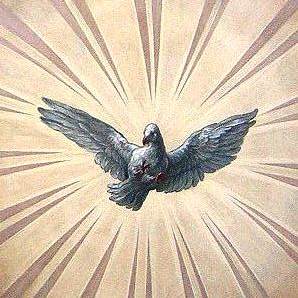
[00:11:14] It just seems clear as we read on about the Spirit of God, how much the Spirit of God tied up with the kingdom of God was a Part of what he was talking about anyway. Once when he was eating with them, he commanded them, don't leave Jerusalem until the Father sends you the gift he promised. As I told you before, John baptized with water, but in just a few days you will be baptized with the Holy Spirit. That's exactly what he said at the end of the Luke. He said that the Spirit of God is going to come. Wait here until.
[00:11:44] Until I send the Spirit among you.
[00:11:49] Now this is.
[00:11:52] This comes into play powerfully next week as we get to Acts chapter two. And we see how God brings about the origin of the Church and the power that he brings on them to participate in the expansion of his kingdom, in the. In the explosion of his kingdom through the Church. But it's important that they don't move and they don't act outside of being motivated and activated, filled with the Spirit of God.
[00:12:21] And I think this is where the church often gets into problems, that even that last song that we just read, like we should go and we should act and we should make a difference in the world, that is true.
[00:12:35] The action though, comes after being filled with the Spirit, being motivated to do good. People have a lot of reasons to be motivated to do good things in the world. It isn't difficult. It is.
[00:12:50] It's low hanging fruit to say like our church, I don't know, does something social, justice, food, you name it, like, whatever, whatever the current thing is that is like, good to do. Everyone would say, whether or not they believe in Christ, they would say, oh well, those are good people.
[00:13:10] But if you go and you say Jesus Christ is the Son of God and no one comes into the Father but by Him.
[00:13:18] You need Christ to change your life and to become a new person or you will ever forever be in bondage.
[00:13:25] That is not low hanging fruit. That is not easy to say. That is not easy to do. To have a spirit so oriented to Christ, so oriented to God, that you see the world through the lens of God and you not only see, you not only see that there is suffering, but you see the motivation for the suffering being the absence of God in people's lives that we have abandoned. God is the mean, is the source of the suffering.
[00:13:51] And that ultimately the way you close that loop and bring about the end of the suffering will be a return to God.
[00:14:00] And so the message, the work of the church has always been from the start that you will be first filled with the Spirit, motivated to see the world through God's eyes. Not just that you have bad things happen in your life, but that the bad has happened because you have left the Father.
[00:14:22] Now I don't. Please don't hear me to say, hey, if you follow Christ, you're going to have a good life. I'm not talking in a world with sin.
[00:14:34] In a world with sin, suffering will occur.
[00:14:39] It doesn't need to be your sin that brings about your suffering.
[00:14:44] As a matter of fact, I would say in a world where your sin brought about your own suffering only that would be a hideous world to live in.
[00:14:55] When I see you suffering, I would know it's because you're a bad person.
[00:15:00] I need to live in a world where sin does result in suffering.
[00:15:06] I think about my spiritual formation. If I could sin without generating suffering, I also need to live in a world where that suffering doesn't come back only on the one who sins.
[00:15:17] Or my soul would come very coarse and callous towards the world around me.
[00:15:23] I say all this to say I really believe that the world God has given us in the midst of sin is a gracious world.
[00:15:31] As hard as it is, as hard as it is to see that when you are experiencing suffering.
[00:15:40] Okay, let me tell you this. What I just said works a lot better if you are not currently suffering.
[00:15:48] And if you just heard that now in the midst of suffering, that probably sucked to hear.
[00:15:53] I get it.
[00:15:54] That is not something that brings about any. That is, what I just said is like, conceptually true, doesn't do much for the heart. And I totally get that. Okay, anyway, so wait here for the Holy Spirit. Their response to me. I literally, when I saw this response, I was like, have I messed up this whole sermon series?
[00:16:26] So when the apostles were with Jesus, they kept. They kept asking him, lord, help has the time come for you to free Israel and restore our kingdom?
[00:16:37] We've been over this, like the entire sermon series, right?
[00:16:42] For 40 days now, Jesus has been making it clear that your concept of what the Messiah was, that the Messiah was going to be coming to bringing about the restoration of Israel, and that Israel would be exalted and you would overthrow these worldly kingdoms around you. And clearly that's not what the kingdom was.
[00:17:06] I came to overcome sin and death and to liberate you from sin and death. Look at me. I am alive. Touch me, eat with me. Death isn't what we thought it was. Like everything he's been doing about it, and he's like, 40 days of that, and they're like, yeah, yeah, yeah. So are you now going to, like, do that whole, like, overthrowing Rome thing and, like, chariots and swords and stuff.
[00:17:36] I take a step back, I look at that and I'm like, okay, and if I were Jesus, if I were Jesus right now, what would I say?
[00:17:48] There's a reason I'm a disciple, because I wouldn't say this. This is what he says.
[00:17:56] The Father alone has the authority to set those dates and times, and they are not for you to know.
[00:18:02] Don't sweat it.
[00:18:04] But you will receive. Look, he diverts them back to the Holy Spirit, which he said, but as I was saying before you went totally off the rails, you will receive power when the Holy Spirit comes to you. And you will be my witnesses, telling people about me everywhere in Jerusalem, throughout Judea and Samaria, into the ends of the earth. They couldn't have been. That whole question gets everything wrong about what they were going to be doing. They're looking to restore a heavenly kingdom.
[00:18:35] They're looking for it to happen in a particular timeframe. Now, instead of gradually, as you work to be a witness that people will of their, not through coercion, but through agreement with you, to submit their lives to God through their choice, they will lay down their life and come be a part of this kingdom.
[00:19:00] Previously, Jesus had said, when they asked about his kingdom, they said, look around you. The kingdom of God is all around you. Even now, my kingdom is the effective scope of my will. That's what a kingdom is. A kingdom is the place where the king's work is done.
[00:19:13] And so wherever the work of God is being done, here is the kingdom of God. Wherever you see people making choices that are not based on their own, this sometimes get confusing because it doesn't mean that I'm doing nice things. It means that I am doing what God would do if he were me. What would Jesus do if he were me?
[00:19:39] Now I am kind of in the scope of following being a part of God's kingdom. And so wherever God's will is done, wherever the will of the king is done, that is the kingdom by definition.
[00:19:51] And so is it coming now?
[00:19:54] It's never not come. The question is, how is it growing?
[00:20:00] How is your witness bringing about the fullness of his kingdom? Like the growth of his kingdom, the proliferation of his kingdom.
[00:20:10] You can't keep his kingdom from happening. You can participate in his kingdom, or you cannot participate in his kingdom. So they missed that.
[00:20:23] They missed the location. They're looking for Israel. They're thinking very small.
[00:20:29] He makes clear, this is not going to be about Israel. This will be about the entire world.
[00:20:33] The scope of my kingdom is not as Small as you think it is, it is not limited geographically, it is not limited by time, and it is not limited by your physical sense of a king making it happen.
[00:20:48] So you will be my witness telling people about me everywhere in Jerusalem, throughout Judea, Samaria and to the ends of the earth.
[00:20:59] This is Jesus giving them the mission of Christ, the mission of God.
[00:21:05] The Father sends the Son.
[00:21:07] The Son says, I will be sending you to participate in the mission of God.
[00:21:11] This is where I think, you know that second book, we call it Acts. And a lot of people think it's the Acts of the Apostles. Maybe so they started, I think Irenaeus started calling that in like about 100 years after the book was written or so. So maybe that's what they always thought of it as, I don't know.
[00:21:29] But it feels more like the act of Christ through the apostles in the Spirit.
[00:21:36] It is the continuing act of Christ what's about to happen in this book. It's not like we switched over from what Jesus was doing to what the apostles are doing or from what Jesus was doing to what the Holy Spirit is doing. This is the continuing work of the Holy Spirit through Christ and his disciples, all the way, right through. Because God is giving the church this mission, or we call it a commission, a mission with him.
[00:22:02] Matter of fact, the great commission, the way. The way Luke describes this Commission in Acts 1. But at the end of Matthew, Matthew describes it this way.
[00:22:10] Here's the way Matthew describes this commission in which we continue on the work of Christ.
[00:22:16] Sundays, so the 11 disciples went to Galilee, to the mountain Jesus had designated, and when he saw them, they worshiped him.
[00:22:22] But some doubted.
[00:22:25] I love the little injections here and there that like Luke didn't say anything about this, but Matthew did.
[00:22:32] Gosh, I can't imagine being there in that time.
[00:22:40] Being 1. Can you imagine being 40 days with him in the middle of all that?
[00:22:45] And still you're like, this doesn't seem real. You know, I get it.
[00:22:50] I wonder if I would be one doubting.
[00:22:54] Then Jesus came up and said to them, all authority in heaven and earth has been given to me.
[00:23:02] All authority, all power exists.
[00:23:05] And so what will I do with that power?
[00:23:09] I'm going to tell you to go and just tell people what I've told you. Make disciples, teach them to be like you.
[00:23:19] You are followers of me.
[00:23:22] That's with all of my authority. I'm sending you out to teach other people what I've taught you.
[00:23:29] All the authority of God has been placed on the disciples of Christ.
[00:23:36] To just tell their story.
[00:23:40] The entire work of God in redeeming the world comes down to disciples sharing the story.
[00:23:53] That is crazy.
[00:23:58] All authority on heaven and earth has been given to me. Therefore go and make disciples of all nations.
[00:24:06] Don't assume that anyone is outside of your scope.
[00:24:11] Whoever you run across baptizing them in the name of the Father and Son of the Holy Spirit. That means to be baptized, meant to be. That was your identity. It's kind of like a baptismal experience would be similar to what we have in a wedding ceremony where you like take an identity like you become bound up in somebody else and you take an identity of becoming one with that other person. Being baptized would signify becoming one with God. Not only God, God who is Christ, God who is the Holy Spirit.
[00:24:45] Teach them what it's like to follow me and then include them in a community in which their identity is in me, just like your identity is in me. Include them in that, whoever they are.
[00:24:59] No favorites. Doesn't matter if, doesn't matter the nationality, it doesn't matter. Any of the background thing that you think.
[00:25:06] Anything that you think might be a reason to segregate people doesn't exist among us.
[00:25:17] And teach them to obey everything I've commanded you.
[00:25:20] We.
[00:25:23] This may not be something you've thought much about, but man, people talk about a lot in Christian circles the distinction between obedience and faith.
[00:25:30] I don't think there is one. James doesn't think in book of James he makes it clear, like, show me, show me your faith without your works. Certainly you can do.
[00:25:40] You could do it. You could do a good thing and I could do a good thing. And our motivations might be totally different.
[00:25:48] You will not do a God thing unless you are motivated by God.
[00:25:53] Your faith will lead you to act as Christ would act if he were you.
[00:26:01] And so when you are called to be obedient, that is a call to faith necessarily.
[00:26:08] And to think that you have faith without obedience. James says, that's not a real faith. That's not, that's dead.
[00:26:17] That is the faith of Christ is something that is alive. Which means I am motivated to act. If I say, gosh, I don't know, something dumb, dumb analogy.
[00:26:29] I have faith that that chair can hold me. As a big guy, by the way, I've had to some. You go to, you go to like these certain. And they got the fold out chairs and it's like real little. And it's like the little white ones, whatever. I'm like, gosh, I don't know, you Know, And I don't sit on it because I didn't have faith in that chair.
[00:26:48] All right?
[00:26:49] I act that chair, bro. I will flop in that chair.
[00:26:54] I have faith. I will act because I have faith, right?
[00:26:58] This is always what obedience, like faith is always captured in action. You will act on faith and so obey. If out of your faith, be obedient to everything that I've told you.
[00:27:14] And remember, I'm always with you to the very end.
[00:27:18] You don't have to worry about doing this alone.
[00:27:21] When you're suffering, I am in you with you suffering.
[00:27:26] When you're joyful, I am in you with you celebrating.
[00:27:31] When you are making that hard call, I am with you. Proud of you making that hard call.
[00:27:37] I am always with you as you act in faith with me.
[00:27:45] We're together in this.
[00:27:47] This is going to be so important for the disciples as they go out and make choices that end with almost all of them dying.
[00:27:58] All right, let's get back to Acts.
[00:28:01] After saying this, after delivering this mission, this commission to them, he was taken up in a cloud while they were watching. And they could no longer see him. After 40 days, proving to him that he was legit, totally physically alive. Look, I'm eating with you. Touch me, hug me, I'm here.
[00:28:22] He then does something that ghosts do. He just like takes. He just like goes off into the clouds, apparently.
[00:28:31] And as they strained to see him rising to heaven, two white robed men suddenly stood among them and said, men of Galilee, why are you standing here looking, looking into heaven? Because that's where Jesus went.
[00:28:42] This same Jesus who had been taken up for you into heaven will come back in the same way that you saw him go to heaven.
[00:28:49] Don't just stand around here waiting for him to physically return. He, like he said, everything's going to happen.
[00:28:56] Finish out at God's timing. Not for you to know. Doesn't that doesn't matter.
[00:29:05] We talked about this in link group. Like, why did he need. What's the ascension about? It's kind of weird. Like, why not physically stick around for the disciples during the, during the origins of his church, right? Why not keep at that?
[00:29:21] Some people in our group said that, you know, maybe they would have had the problem of like, almost treating him like an idol, like not being able to look, not to really be able to trust that the Spirit of God was inside them because they were constantly looking at the image of God outside of them, that in order for them to really trust in the spirit of God, that the spirit of God was with Them in them as they were suffering, as they were celebrating, and as they were living out their life in this great Commission. They needed to not have the external representation of Christ so that they could fully embrace the internal reality of Christ in them, of God in them.
[00:30:01] Powerful.
[00:30:04] Yeah. I think also they just, they just needed to.
[00:30:14] Oh, this got brought up too. Almost like a, almost like a kid leaving the house. In order for you to take ownership of your mission, you kind to be an adult, you kind of need to be outside of your house making, making those choices. And so being in a spot where they couldn't constantly be asking Jesus this way, Jesus, should I do this, should I do these, Jesus, but like to trust that the Spirit of God was working inside of them instead of continually having essentially the crutch of Christ to keep telling them, no, you're doing that wrong or you're actually doing that right. They needed to be able to kind of grow up in that way. Those were kind of some of the things that were brought up in link group and I think that's really good.
[00:31:00] Probably, probably right. Something else I think about is there's almost two problems that are.
[00:31:08] Because he was ascended, there were two different things that happen here. One, first, they're still expressing this desire for the physical orientation of the kingdom to happen, right?
[00:31:21] They need to be oriented away from the physical like that, that a messiah is going to become and physically force the kingdom of God to occur. They need that. They really, really need to quit thinking that they need to not have the Messiah in front of them, thinking that that political military leader is going to make things happen. And so in a certain way they need to move, orient themselves more towards the spiritual kingdom rather than this continuing belief in the, in the physical kingdom. People talk about like that, you know, America is a, America is a Christian nation.
[00:32:03] It's impossible. No nation can be a Christian nation.
[00:32:09] Only people can follow Christ. Only, only people can because only people can make that choice. You can't be coerced. There isn't a system of govern that can force people to follow Christ. That is only something that happens through an internal choice to follow and to submit to God. So I need to quit thinking that there is some political motivation or means by which his kingdom can occur. But then also we see them. So he goes and then we see them. They just keep looking up into heaven and worshiping him.
[00:32:45] And then these angels show up. I mean, he doesn't say angels, but like clearly he's talking.
[00:32:50] Luke constantly describes angels this way and they're like look, you gotta quit looking to heaven.
[00:32:58] You gotta start looking back. You've been given a mission to go among people and with humility, share your story and keep, Keep a tangible. Like, it's like, on the one hand, I need to quit having such an earthly view that I see a political means or like there's some coercive way to bring about the kingdom. And on the other hand, I need. I need to get my head out of the clouds and I need to pay attention to the physical reality around me. And that following Christ means actually working with him in the restoration of all things, to participate. To participate with him on this mission. And we see them in this story, as so often happens, as the disciples describe their encounters with Jesus, we see them failing in both directions. We see them. I love their humility in that we see them constantly, even towards the end, still looking for the physical kingdom of God. And then we see them with their head in the clouds, thinking about. Only about the spiritual reality of Christ.
[00:34:00] No, in both directions. That's not what the mission is about.
[00:34:04] The mission has a spiritual reality that ends in a physical reality.
[00:34:08] It literally changes the world.
[00:34:12] And the spiritual reality of following Christ involves dirty hands, not just like, imagining or considering or having great ideas and having, like, really like, oh, that's a great theological concept, man. The more you read, the more you read about theology and the history of theologians. Those guys did not. Those guys had dirty hands. Those guys were, like, physically in the thick of it, constantly working towards the kingdom of God. They weren't just in some castle having interesting thoughts about the kingdom. That's never what theology is about. Theology is real good. Theology is always tangible and involves people doing the work, the commission with Christ.
[00:35:00] So we kind of see them.
[00:35:02] We kind of see them.
[00:35:04] We see in this story Jesus correcting both of these errors. And so you have. You have these people going, moving from despair, hope, confusion, constantly misplacing stuff, getting things, getting things wrong in multiple ways. And each of these times, Jesus is like, nope, not here. Nope, not here.
[00:35:26] No, not that way. And as I'm reading through the story, some of these are ways that I am prone to, like, oh, yeah, if I left my own devices, I might, you know, mess. These ways over here aren't. These aren't the ways I tend to mess up, but these ways over here are the ways I tend to mess up. But collectively, these. All of the ways that the disciples over these 40 days were reformed into following after Christ and becoming people that were prepared to receive the spirit of God and act on the mission of God, together with God, we see them correct, being corrected in all these different ways. And in this, a disciple of Christ will find themselves.
[00:36:15] You have been called to, to participate on the commission with Christ in the continuing Acts of Christ.
[00:36:27] In Greek, that word Acts is praxis, the practice, the practice of Christ with his disciples through the Holy Spirit, the Acts, the practices of his church. That's your job. It's literally that's your identity. When you say I am a Christian, my identity is a missional identity.
[00:36:53] And of all the different ways that I can step outside of, I can presume something a little too physical that might involve like, you know, using earthly kingdoms to coerce, using, you know, earthly powers to coerce people or to just be so heavenly minded that I forget to actually function and work in loving people, loving my neighbors, or I have these doubts that creep in or I'm too overly confident. There are all these different ways that my spirit gets out of alignment such that I'm not prepared to live within a spirit ready to participate in that mission.
[00:37:37] Over the course of these 40 days, Jesus prepared these people to be filled with the Spirit of God and then to act out of the Spirit of God.
[00:37:51] Next week we're going to look at Acts chapter two and we're going to look at the explosion of the power of God that happens among people prepared to receive the Spirit of God.
[00:38:06] What that did then and what that did through the last 2000 years as the story of Christ worked to transform the world.
[00:38:15] That's we're going to get into next week. I love Acts Chapter two.
[00:38:20] Christina's. Christina and Angie are probably the only ones. When, when Horizon was meeting in my basement, in my apartment, we used to talk about Acts Chapter two a lot. You know, we used to talk about the origin of the church and how Christ was brought about that origins and what that original church looked like, the beauty of what that church was.
[00:38:42] That beautiful church is still God's beautiful church.
[00:38:50] Alison sent me a picture just this morning of Rachel in a. Like, probably two. Like just toddling. And I think she was.
[00:39:00] Yeah, I see that picture. And I know my daughter is in her 20s now, but she's still that.
[00:39:08] She's still that little girl. You know, when Jesus looks at his church, we are still that little Acts Chapter two church.
[00:39:18] He sees us and we are still. When we go and we look at Acts Chapter two, when we see the beauty there, that is the beauty that our Father sees when he sees us right now.
[00:39:28] That's what we're going to look at next week. How beautiful he sees us.
[00:39:34] Let's pray, Father. God, we are so grateful for the testimony, for the witness of your disciples. Lord, you have called them to be these witnesses. They were faithful to that. And as a result we were able to come back over and over again and to see your work and to see what you did. Lord, they their faithfulness has been a blessing to us. And God, I pray that we can be faithful in that same way. Lord, I know that you know, you haven't called us to start like the church in Judea, Samaria and the ends of the earth. But Lord, we're in the ends of the earth now. And so where we are. God, I pray that we don't think any less of this calling than they did 2,000 years ago.
[00:40:23] God, I pray that we are faithful and that we act, Lord, to participate with you on this great commission.
[00:40:31] We love you. Amen.