Episode Transcript
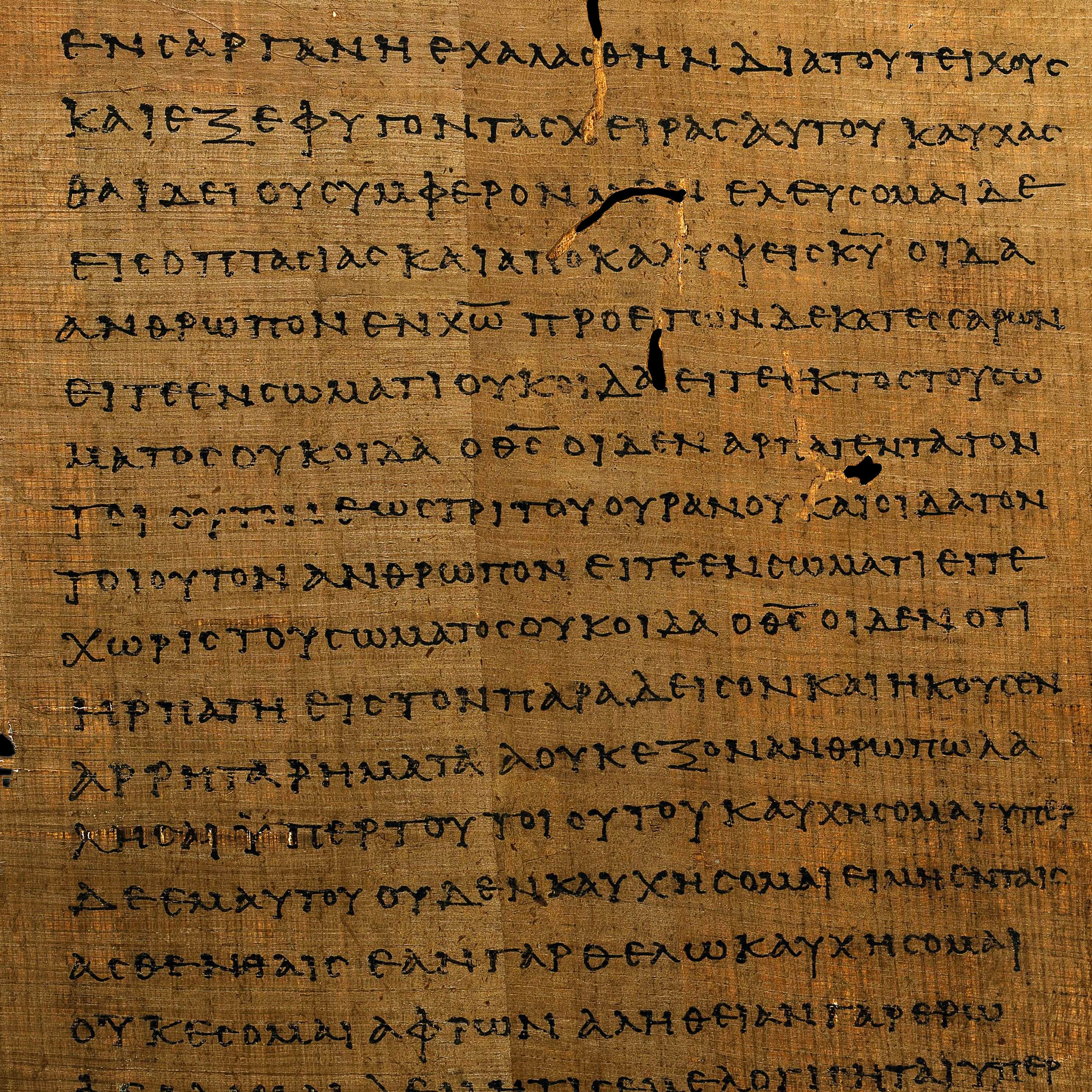
[00:00:01] Speaker A: James, Chapter 1 James A servant of God and the Lord Jesus Christ to the twelve tribes in dispersion Greetings. Count it all joy, my brothers, when you meet trials of various kinds. For you know that the testing of your faith produces steadfastness. And let steadfastness have its full effect, that you may be perfect and complete, lacking nothing.
If any of you lacks in wisdom, let him ask of God, who gives generously to all without reproach, and it will be given him.
But let him ask in faith, with no doubting. For the one who doubts is like a wave of the sea that is driven and tossed by the wind.
For that person must not suppose that he will receive anything from the Lord. He is a double minded man, unstable in all his ways.
Let the lowly brother boast in his exultation and the rich in his humiliation, because like a flower of the grass he will pass away.
For the sun rises with its scorching heat and withers the grass. Its flower falls, and its beauty perishes. So also will the rich man fade away in the midst of his pursuits.
Blessed is the man who remains steadfast under trial, for when he has stood the test, he will receive the crown of life which God has promised to those who love him.
Let no one say when he is tempted, I am being tempted by God. For God cannot be tempted with evil, and he himself tempts no one. But each person is tempted. When he is lured and enticed by his own desire, then desire, when it is conceived, gives birth to sin, and sin, when it is fully grown, brings forth death.
Do not be deceived, my beloved brothers. Every good gift and every perfect gift is from above, coming down from the Father of Lights, with whom there is no variation or shadow due to change of his own, he will be brought us forth by the word of truth, that we should be a kind of first fruits for his creatures.
Know this, my beloved.
Let every person be quick to hear, slow to speak, slow to anger, for the anger of man does not produce the righteousness of God.
Therefore put away all filthiness and rampant wickedness, and receive with meekness the implanted word which is able to save your souls.
But be doers of the Word, and not hearers, only deceiving yourselves.
For if anyone is a hearer of the Word and not a doer, he is like a man who looks intently at his natural face in the mirror. For he looks at himself and goes away, and and at once forgets what he was like.
But the one who looks into the Perfect law, the perfect liberty, and perseveres being no hearer who forgets, but a doer who acts. He will be blessed in his doing.
If anyone thinks he is religious and does not bridle his tongue, but deceives his heart, this person's religion is worthless.
Religion is pure and undefiled before God the Father. And is this to visit orphans and widows in their affliction and to keep oneself unstained from the world?
[00:03:21] Speaker B: Over the next five weeks, we're going to do a sermon series where we look through James, read through James and talk about him. But I just want to start off by thinking about what it's like, what it was like to be James.
James is the biological brother of Jesus. He grew up with Jesus. Jesus was his older brother.
And I've often thought about that.
What would it be like to have Jesus as an older brother?
You know, I hope, I hope we would get along. If you don't get along with Jesus, it's your fault.
You're the bad kid.
But there we have some, we have some clues scattered throughout the Gospels, talking about some of the interactions that Jesus had with, had with his brothers that he would have had with James. And I think it's kind of interesting to look at some of these interactions because by the time we get here, by the time we get to the Book of James, you're dealing with a man who is the. He's the bishop, he is the pastor of the church in Jerusalem, like the home church for all of Christianity. He speaks with a lot of authority.
He is a part of the canon. He is like a person that we look to for instruction about the faith.
When we read the Book of James, a powerful, important believer, one who died for his faith in his brother, in Jesus.
But he wasn't always like that.
Matthew tells us that Jesus had four biological brothers. James, this is in Matthew, chapter 13. James, Joseph, Simon and Judas. And he had several sisters.
His dad, Joseph, was a builder. Greek word tecton, often translated carpenter. But probably better for us to think of it like a construction worker.
Jesus was born on kind of the borderlands between the Roman Empire and another empire that was Rome's biggest competitor, one that beat Rome at several, several times just before this, right before Jesus comes on the scene. And so the Romans were kind of nervous about the Parthian Empire that was to their, to their east. And they built these 10 cities. They called them the Decapolis. And these cities were where they would build up these cities and then soldiers, when they were able to come out of when they. When they stopped being soldiers.
One of the things you would get, you get free land, free property, like, but they would often make this free land, free property in places that they wanted. Some people who were like competent soldiers. And so they would be moving close to Jesus, close to his family. There would be a lot of Romans that were kind of like being repopulated there to create a buffer. And the Jews like Joseph were a part of this construction that was taking place in the area.
Almost certainly Jesus brothers would have been a part of that too. Maybe Jesus. Jesus demonstrated a high degree of competency when it came to scripture. From the time he was young, he could have been a builder, he could have been a carpenter like his dad. He also might have been trained specifically to be religious leader. I'm not exactly positive, I'm not exactly how much sure how much Jesus was involved with the. With the family business, but certainly Jesus, four brothers would have been.
So this is kind of the world that Jesus is growing up in, the world that James is growing up in.
He has several brothers. His older brother Jesus is three, probably three younger brothers, several sisters. He was probably a builder. And it is his responsibility, just like his brothers, to see that his family is safe and protected, that they are honorable, that their reputation matters. Because without a good reputation, your position in society would have been at stake and the safety of your family would have been at stake. That's the world that James is living in.
So with that in mind, I want to look at some of these passages that talk about James a little bit. This first one comes from John, chapter seven.
It says Jesus stayed out of Judea because the Jewish leaders wanted to kill him. So Jesus was operating up in Galilee, close to his home area, close to those where, you know, his brothers would have worked and stuff.
He wasn't going down to the southern part of the country to where Jerusalem was, because that's where like, all the political intrigue was. That's where a lot of the religious leaders that were like, that's where the. That's where the temple was and all that kind of stuff.
It is also where a lot of conflict was taking place between the Jews and the Romans and all that kind of thing. It was where they were expecting the Messiah to emerge. And so it says John says Jesus was staying out of Judea because the Jewish leaders wanted to kill him.
He was already causing so much problems that they were assuming that he was another one of these false messiahs that were going to put them in trouble with the Romans.
Now the Jewish Feast of shelter was near. So Jesus brothers. So this was James and his three. And three other brothers said, leave here, go down to Judea so that your disciples, John and these other dudes that are following you will see your miracles that you're performing. For no one who seeks to make your reputation for himself does anything in secret.
Nobody does what you say that you're doing up here in Judea where nothing matters. Go where what you're doing will matter.
And he says, if you're doing these things, show yourself to the world. Now, to me, that sounds like, oh, that's good. Like, they're saying, like. Like, we believe in you. Go show yourself. But then in parenthesis, James, I mean, John, adds this at the end, for not even his own brothers believed him.
So what. What you could read initially as, like, good advice, people that believe you. I'm like, oh, no, these are brothers. This is sarcasm. This is them saying, like, hey, you think you're Mr. Big Shot? Why don't you go be a big shot instead of, like, talking a big game up here where nothing matters, like, you're playing it, being a big deal up here where there is no big deal. Like, you're being this big fish in a little pond. You're like, you know, you think you're Mr. Big Britches. Why don't you go down and play in the big leagues? This is basically what they're telling him. And he says, john, who was, you know, pretty young, probably 15 years old, the youngest disciple. John, seeing this interaction between Jesus and his brothers, and he's like, ooh, man, Jesus brothers, didn't. They don't.
They are treating my rabbi like I don't think he should be treated, but kind of the way brothers treat brothers.
Again, if you're Jesus, brother, you're the bad guy. If you're the one that's rough, man, this is James. James is the bad guy. John makes it clear.
Also in Mark, we see a story where Jesus is.
Jesus comes back to his hometown and things are chaotic. A lot of people are. You know, there's like.
There's a lot of preaching, a lot of people following him, and it's just creating a lot of chaos in town. And his. His. His family is like, he's out of his mind. Don't listen to him. You know, like, they're like, they're clearly worried. They're. They're clearly concerned. And it's. They're either, like, genuinely worried for their life or they're worried for their reputation. When we hear that, we think oh, you're just worried about your reputation. No, if, if, if your village, if your town sees your family as a problem, they're not going to work with you anymore. Like when, when, when projects or things happen where we have to cooperate and work together.
Your family is one that we don't trust anymore and we're not going to work with you. And if they're not going to work with you, like, your family is in danger. Like, to lose reputation would have included, like, actual physical.
Like, it could have been really bad for your family. So Jesus family, including James, was telling people, he's crazy, don't worry about him. All that's going on here, don't let what he's doing here, don't let that come back on us.
Don't punish this family for what Jesus is doing right here.
Later on, and also described In Luke chapter 8, I got captured here. Luke chapter 8 says, now this is in the same kind of, according to, according to Mark, this all happens kind of together. He says, now, Jesus mother and brothers came to him, but they couldn't get near him because the crowd was so large. So he was told by someone in the crowd, hey, your mother and your brothers are standing outside waiting to see you. But he replies to them, my mother and brothers are those who hear the word of God and do it.
Which must have been like, you know, he's crazy, don't listen to him, let's go get him and like, take him away from this, that kind of thing. And he's like, I'm busy. I'm doing exactly what I'm supposed to be doing.
And the people that I am family with are the people who are, who are doing with me, not doing against me.
Pretty strong rebuke.
So this is the background when you think about what it was like to. I don't know what it was like to be with Jesus when he was like 12.
But at the point that Jesus is in his ministry, his family is worried, probably worried for him, definitely worried for themselves to be a family with him, like, it's dangerous to be his family.
So you go from this, you go from this person who is trying to protect your family, probably trying to protect Mary and Joseph. These brothers are looking and seeing Jesus causing these problems that are going to come back on their family. And they are kind of mocking him. And then they're like, you know, seeing this little bit crazy, hey, why don't you come and stop this?
That's who they were earlier.
Now you fast forward, like not more than 15 years later.
James writes this book to the church in Jerusalem, and he starts with this.
From James, a slave of God and the Lord Jesus Christ, to the twelve tribes dispersed abroad.
He starts this book by saying, I am a slave to my brother.
Like everything, everything that I was worried about, all of the concerns that I had about who this man was and what he would be, what he was doing to my family. I know he's my brother and I love him, but I don't like what I see him. I don't like the danger that I see him placing my mother Mary on.
I don't like where this is going. And I feel obligated to protect Jesus, to protect the family from Jesus and probably to protect Jesus from himself, because I see where this is going. And they were right.
I mean, it was dangerous, obviously.
Right. James ends up dying, like, for his faith. Like it's. He is correct. They were correct. Jesus was a danger to them. They weren't wrong about that.
But they go from being concerned about that to saying, I am. My every.
Every thought that I had about what mattered about my role in this family and what I would be doing in my life.
I have literally made all of my will subservient to the will of my brother. I see that everything that he thought about the way we should live and work and interact, the fears that he clearly did not have about Rome, the fears that he did not have about the Jewish leaders, like all the concerns that we had that we thought we need to protect our family from, he was right and I was wrong. And my mind is now captured by his mind. I am his slave and his will was correct, not ours. That's where he starts this letter.
In that 15 years before the resurrection of his brother and after the resurrection of his brother, he goes from being one.
He looked at Jesus disciples and kind of mocked Jesus in front of his disciples to becoming one. That his disciples said, we trust you so much. You makes sense to be the. To be the past. The leader of the church here in Jerusalem. He goes. He goes from that extreme to the other. And he begins this letter by saying, my brothers and sisters, who is my family, the ones who, who listen and do hearers and doers consider about, Consider it nothing but joy.
When you fall into all sorts of trials, all those things that we were like trying, trying to save Jesus from, trying to save our family from all the trials that.
All the anxiety that Jesus created in their life, consider it nothing but joy when you fall into all sorts of trials because you know that the testing of your Faith produces endurance. He then goes on to describe the value of that.
But I wanted to bring all that up because he is writing to people.
When he was writing this, he wasn't talking about his own trials. Currently at this moment, the Christians that initially lived in Jerusalem, they were scattering, it says, to the twelve tribes, that is the Jews, who were scattered all throughout the world. Now because there was so much persecution that was happening in Jerusalem. Not just persecution, but there was a famine going on. If you were a Christian or a Jew, you were dealing with that.
The Romans were again, super annoyed with the Jews because of the way the Jews were not playing ball. Like literally the absolute worst Roman subjects in the entire empire.
Rome has to keep dealing with them there.
But also Christians were dealing with persecution from that. On top of all that, the Jews didn't appreciate them. So they were being. They were being persecuted by the religious leaders because they considered the Christians to be a, a heretical sect.
So they were dealing with all this stuff. They were losing their property.
[00:18:06] Speaker A: The
[00:18:09] Speaker B: we. I'm not sure exactly the degree of the prostitution. I don't think at this point, at, at this early date, I don't think they were actually.
It was not widespread that they were being killed for the faith. It was happening here and there, obviously, but it wasn't as widespread at this point. But there was a lot of persecution happening and people were leaving. People were heading out to other places where there were less persecution that was happening.
They were at a brutal point in their life. And he begins this letter, this person who used to mock his brother, who now considers his brother to be his master, like, literally, I submit my entire life to Jesus, knowing that he is of our Heavenly Father. And he begins this letter by saying, in the same way that I used to be worried about all the persecutions that took place, and I learned that just the opposite, I could learn to take great joy in it. You also need to take great joy in the circumstances that you're enduring now. I've been. Been where you are, I've experienced it, I've gone through it. And I have to tell you, my life is so much better now. Consider it great joy. So that's how he starts this letter.
This is the man who is going to be writing this wisdom literature to these people. He is a pastor. He's not writing this letter like, as a, as a theologian or like a professor, as a pastor. He's writing this letter to people he knew that are having to leave their home.
And he's trying to encourage them.
Now the Way James encourages them is not a way that it's not often today people think of encouragement this way.
When you read James, you might think, whew, this dude's harsh. Like, he's tough. You know, it was so bad. Like, Martin Luther ripped it out of his Bible and said, this doesn't belong here because James is so harsh.
I love James. It's like one of my favorite books of the Bible. Because I think very often I can read other parts of the Bible and I experience the grace of God. And I am so grateful for that grace that I can let it.
I can forget that that grace is intended to create something different in me, to make something different of me.
The grace of God is not intended to allow me to wallow in the worst of who I am. The grace of God is designed to create the very best possible version that you could be, that you could be reconstituted in the image of God from this sinful man. And James does not let you forget that even at your lowest point, when you give yourself the most freedom to say, my life is awful. If anybody has it, has a right to curse God. I have it right now. James says, in this moment is when God intends for you to be your best.
As you're reading James, that's. That's what it feels like. Okay, I wanted to. I'm not going to be able to go through the entire book, but I wanted to skip down to the very end of the first chapter, which I think gets to.
It will get to the point of the entire rest of the book. The rest of the book is broken out in basically 12 sermonettes about how to live your life. And he.
At the end of this first chapter, we see the kind of like the major heading about the rest of it.
He says, be sure to live out the message. Live out the message and do not merely listen to it and so deceive yourselves.
He's literally saying, you right now heard James preached or spoken.
Then you heard James preached, you heard a message about Jesus.
There was probably something in there where you thought, oh, that's interesting.
Did it also become.
That's a point at which my life needs to change.
Is there something that I need to do as a result of what I just learned?
If you are just a listener and not a doer, you are missing all of it.
You've gotten nothing from listening, and it was pointless if somebody merely listens to the message and does not live it out. He gives us an analogy. It's like someone who gazes at his own face in A mirror.
For he gazes at himself and then goes out and immediately forgets what sort of person he was.
But when. I mean, it's like a. It's like a mental illness where you see yourself and then you go out and you literally forget yourself.
But the one who peers into the perfect law of liberty, of. I love the way he describes grace, the perfect law of liberty, and fixes his attention there and does not become a forgetful listener, but one who lives it out, he will be blessed in what he does.
I've sometimes heard.
I haven't heard this as much anymore, but when we were in the movie theater years ago, we'd have people coming and visiting Horizons, stuff like that. And they would say things like, I really appreciate that sermon. I really felt like I got to the meat of it. Like, it got to the meat of the gospel, you know? Or on the other hand, like, I just kind of want more meat.
And I was like, what's more meat or less meat? It's like the Bible. I don't know what I'm like. I was like, I don't know how to give you meat. All I know how to do is say, this is what it's saying, you know?
But then I read this. This is From John, chapter 4:34. Jesus says, My meat, my food is to do the will.
The one who sent me.
You're not going to get meat listening to me.
You're going to get meat when you listen and you go, aha, I need to do something. And then you go do it.
Your meat, like Jesus is to do the will of God. Never. Just to hear the will of God. If you hear this and you're like, yes, that was like the best.
My mind has been open, and I have all of the.
All of the most beautiful concepts in the world just came to me like, oh, my gosh, that's like the most brilliant thing I've ever heard in my life. And you do nothing with it. You didn't get any meat. There was you. You weren't sustained by it a lick.
Nothing came from it. That was sustenance for you.
On the other hand, if you sat. If you. If you were here and somebody just got up and said, for God so loved the world that he gave his only begotten Son that whosoever believes in him will not perish but have everlasting life. And something in that creates in you a desire to follow Christ in a way that you never had. You just felt. You just experienced the meat of the message of God.
The very Simplest concept that you've ever heard about Jesus.
When it generates in you a transformed life so that you are more like Christ. You have just experienced meat. This is what he's saying here, okay?
The one who peers into the perfect law of liberty and it fixes his attention there and does not become a forgetful listener. He is the one who's blessed. He is the one that's just received meat.
Now he goes on to describe what that transformed life is. That is the meat. He says, if someone thinks he is religious, We don't necessarily see anything great about that. Like, oh, that person's super religious.
We might think like, oh, that person's. If you hear somebody's religious, you might think like self important or hypocritical. We have like negative things that we might attach to a person who's very religious when we hear that word. That wasn't what. That's not what he's saying. What he's saying. When you see a person that you're like, bro, that's like apex Christian. I don't know. In your mind, I don't know what it is for you, but in your mind you're thinking like apex Christian. Like that is that when I see that person, I'm thinking like, if someone thinks he's religious but does not bridle his tongue and so deceives his heart, his religion is futile.
If you can't even control your own tongue, if you can't even get to the point that when you're communicating with somebody else, you can communicate with them in a way that demonstrates the love of God that they see in you. Something that reminds them of Christ. Not a false Christ, but like Christ as he is.
Sometimes love is very harsh. Sometimes love is very gracious.
I don't mean you're saying things that make other people feel good. I mean that you are genuinely loving them the way that Christ would love them in that moment. Sometimes when Christ loved people, it was not what they wanted to hear, but when you can control your tongue in a way that the message of Christ is normative for you. When people interact with you, they think it is likely that if I talk to this person about something that matters to me, I'm going to get a little bit closer to what God thinks about the situation.
The, the way that they think and the way they interact is Christlike.
If you can't do that, no matter how religious you think you are, your religion is futile. And then he says, pure and undefiled religion before God the Father is to care for the orphans and widows in their adversity and to keep oneself unstained by the world.
And we'll look at these two things in turn.
To care for the widow and orphans was a shorthand for whoever is vulnerable among you.
Are there people that you.
That are in your orbit that are more vulnerable for whatever reason?
It could be because of a, you know, physically they're not in a good spot.
It could because they suffered some sort of loss.
Like with widows and orphans, especially in this culture, their protection was taken away. Their husband, their father, the one who could provide, could sustain that. They could expect that on a normal day, my life will work out. That means is gone for them.
They are in danger as a result of the vulnerability that they have.
They're afraid. And I don't mean afraid because like, you know, their brains wrapped up in some crazy narrative that's not true. I mean they're genuinely afraid because their life is vulnerable, truly vulnerable.
True religion is that you see them as just like you. The same way that, the same way that you intend to see your family cared for, you see, you intend to see that person cared for first. Timothy 5 Paul writes to Timothy, Timothy is a, is a pastor at his church.
And he is like, he's like, he's like Paul's favorite, he's like his, like, you know, he loves him like a son. And he writes to him and he explains, he kind of like details this whole idea of, of caring for the vulnerable and how you do it.
He wants Timothy to know not just that you should care for the widows and orphans, but how you do that.
He says, honor widows who are truly in need.
But if a widow has children or grandchildren, they should first learn to fulfill their duty towards their own household and so repay their parents what is owed for them, what is owed them.
What he's saying here is that the church doesn't take the place of the family. The church doesn't override the obligations that we have to each other as family. I think sometimes there's almost like a cult like relationship that happens in a church where the family is pushed out. There's no relationship. There's no space for your individual family to take preeminence. No, you have a responsibility to you. That first unit of care and love is your family.
The church is there to support you, to be a part of that, to undergird that, but not to take your place. He says, don't think of the church as a replacement for the families in the church. Think of it as a umbrella over it that supports and protects it and helps it function well.
This pleases God, he says. But the widow who truly is in need, that is, they don't have the family there to care for them, that they are completely on their own, has set her hope on God and continues in her pleas and prayers night and day.
If you are vulnerable, if you're truly at a spot where you don't know what you're going to be able to do, you don't have family to help you. You're afraid. Like, you're.
When he says that widow is pleading before God, he's not just saying, like, she's making a ruckus about things. Like, there's something in her gut where she feels alone and isolated and afraid. She needs to know that she's not that person who is vulnerable for whatever reason, needs to know that they're not alone.
You've got them, you're there with them.
Very small ways, subtle ways, maybe, sometimes big ways, maybe what you do is the kind of thing that she would, like, talk about and be like, wow, that was really cool that you did that. Or maybe that thing that you do, she doesn't even know you did it.
Great.
The goal isn't that you're like the hero.
The goal is that you're family and that you notice in big ways or small ways, anything that can be done to care for them, to be family to them.
This. This is the role, he says, for the church.
This is true religion, James would say, is to function this way. But then, but then, but then Paul says this to Timothy. He says, but the one who lives for her own pleasure is spiritually dead, even while she lives.
He's.
What he's saying is there's a.
There is a role for the church to function in caring for the people who are truly vulnerable.
But there are people who will feign a vulnerability in order to gain resources at your expense.
There are people who are looking to take advantage of you. There are people who are looking to.
For their own pleasure.
[00:33:21] Speaker A: I love.
[00:33:22] Speaker B: There are several examples in the early church where there were people who were in vulnerable positions.
For instance, there was this guy who was a.
He was an actor. And in the first, an actor was a person who was a liar. And you engaged in activity to be an actor. You were expected to do things that a Christian wouldn't do.
And when he converted to Christianity, they told him, you know, you kind of have to give that. You have to give that up. Like, you can't continue to do that thing.
And he said, okay, but now his occupation is gone. What's he going to do for money? He asks his pastor. He says, can I teach acting? I know I can't act, but I could still teach and I could make some money that way and I could still survive. I wouldn't be making as much money as I used to, but I could still survive if I act. And this pastor's like, I'm not sure. He went and checked with another pastor, and we got this correspondence back and forth between these pastors. This is like really early in the church.
And the response from the older pastor is like, no, listen, if he can't do it himself, he can't be teaching other people to do it. But we recognize that this is going to put him in the position that he's vulnerable, that he's in a position that he can't provide for himself anymore. So we'll have to care for him.
The church will take care of him. In order to follow Christ, he had to give up his occupation. And giving up his occupation became vulnerable. The church cared for him like a widow and orphan. But then the pastor says this, but make sure he understands he's going to be taken care of the way you and I are taken care of. And what that means is, like, he's not going to be. He's not going to live in some excessive. Like, he's not going to have the same standard of living that he had when he was an actor.
Like, he's. He's not in a position where he's going to be, like, super, like, super well off.
The church is going to care for him, but he's not going to be taking advantage of the people that are caring for him.
This is what's. And as a person who was vulnerable, he was very grateful that the church cared for him, not living the opulent lifestyle that he was used to, but that the church met his needs, and he was grateful for that. You know, I think that this description, when you take James and him together and the early church example, you take all that together.
It's a beautiful look into what it means for our true religion to play out among the people that we care for each other and our vulnerability. We don't take advantage of each other. We don't try to receive in excess.
I know that everything I receive in a paycheck, my paycheck comes from my friends.
Right? I know this.
It's important that I don't push for the most I can get or whatever, you know what I'm saying? It's Important that I don't take advantage of you in the same way. It's important that we don't take advantage of each other.
We are there for each other. We care for each other. We don't take advantage of each other. This is collectively true religion, half of it. The other half, he says, is that we keep ourselves unstained from the world. That actually just means spotless. It's the same way it was like the spotless lamb. It's a person who is not living a lifestyle that you would say is like, that's kind of shady. A person is living in a way that is like true religion is that you care for each other, you don't take advantage of each other, and you're also a person who's above reproach.
Being a proud reproach doesn't mean that you're perfect. The way we think about perfect it is.
James continually uses the word perfect, but it's perfect the way that a.
The way something is functioning the way it ought to.
This includes a daily lifestyle of attempting to make everything that I've learned play out in my actions, that I'm both a hearer and a doer.
And it includes, when I fail, I am quick to notice it, I'm grateful when it's called out, and I repent. I am a person who doesn't have the pride to say no.
If you were me, you would understand why you did.
I had the right to do those things. You don't know what I went through. Like whatever justification you have for living a life that doesn't fit a follower of Christ.
You don't justify yourself when it doesn't happen.
You repent when it happens. When you're. When you don't measure up, you're not. It's not guilt. It's not a feeling of guilt. You're not like, oh, woe is me. I'm such a bad person.
What you're thinking is, I'm a disciple and I'm learning, and I didn't get that right.
And I recognize I didn't get it right, and I want to get it better next time.
This is really what it means to be. To be spotless. To be blameless.
Every day you're waking up, and to the best of your ability, you're learning more, and you're doing what you learned when you don't do what you learn. You think I got that wrong? I repent. I was wrong, and I want to do that better next time.
If there's something to learn from somebody else. Hey, hey. I noticed that you're good at this. I'm not. What am I getting wrong here? Like, you're willing to, like, learn from your brothers and sisters around you and you get better at it over time, just like anybody else that learns. You don't expect anybody who's first learning anything to be like a master at it. You also don't.
There's no guilt in not being something that you're not able to be yet.
Perfect means that you are as you ought to be and you're learning to be better at that.
James says, I have made my brother my Lord. I am a slave to him.
All the reasons that I had anything bad in my life, that I had to think I can go my own way, I've captured that now. When things don't go wrong, I actually consider it to my advantage because it reveals in me things that I need to get better. Like I'm. These hard moments put me at a position that I could now just. I could. I could justify in my head reasons not to follow Christ instead.
I'm going to be spotless in this moment. I'm going to trust as captured by his thoughts. I'm going to trust that he's right even in the darkest times. And I'm going to follow him now.
That means that I'm going to. I'm going to interact with you in love. I'm going to care for you and I'm going to trust that you'll care for me like family.
And when I'm not good at it, I'm going to repent and I'm going to look to do better at it.
This is kind of the chapter one is like this of James is like this like statement of like, this is what it. This, this is like a top end statement. And then the next four chapters has like 12 vignettes of examples of how this plays out in different aspects of your life. What it looks like to practice true religion in every aspect of your life. And we're going to be looking at that over these next four weeks. We're going to be looking at the rest of James. But I wanted to start off with.
Really what I want to start off with is humanizing James. And it means a lot to me to see where he came from and who he became.
This is fundamental to being a Christian.
You are not who you were yesterday, you are becoming.
And when you look and see who James was and who he became, there's really no. There's no cap to what God is able to do in your life, what you're able to become when you capture yourself and you make yourself a slave to Christ.
Let's pray.
Father God, I thank you for your word. I especially thank you for this book that is very loving and very challenging. And I thank you for the wisdom that he expresses here. Wisdom that sounds a lot like your words, actually.
God, I pray that in the same way James had deep love for his church, that we read this book with that same love for us, knowing that his pastor's heart spoken is for us as well.
Father God, we love you. I pray that we can be this church.
Amen.